The Setting

The World: Omner

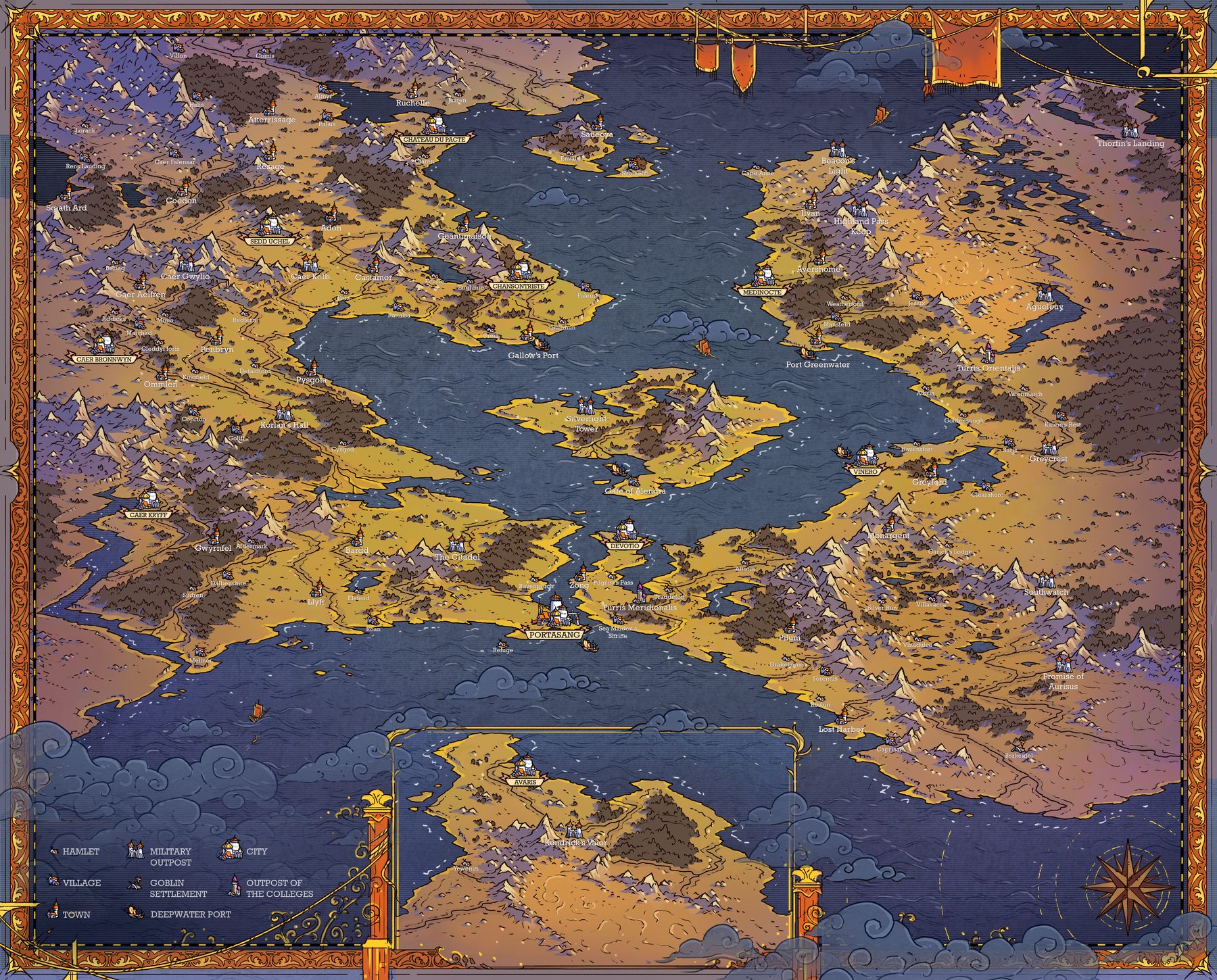
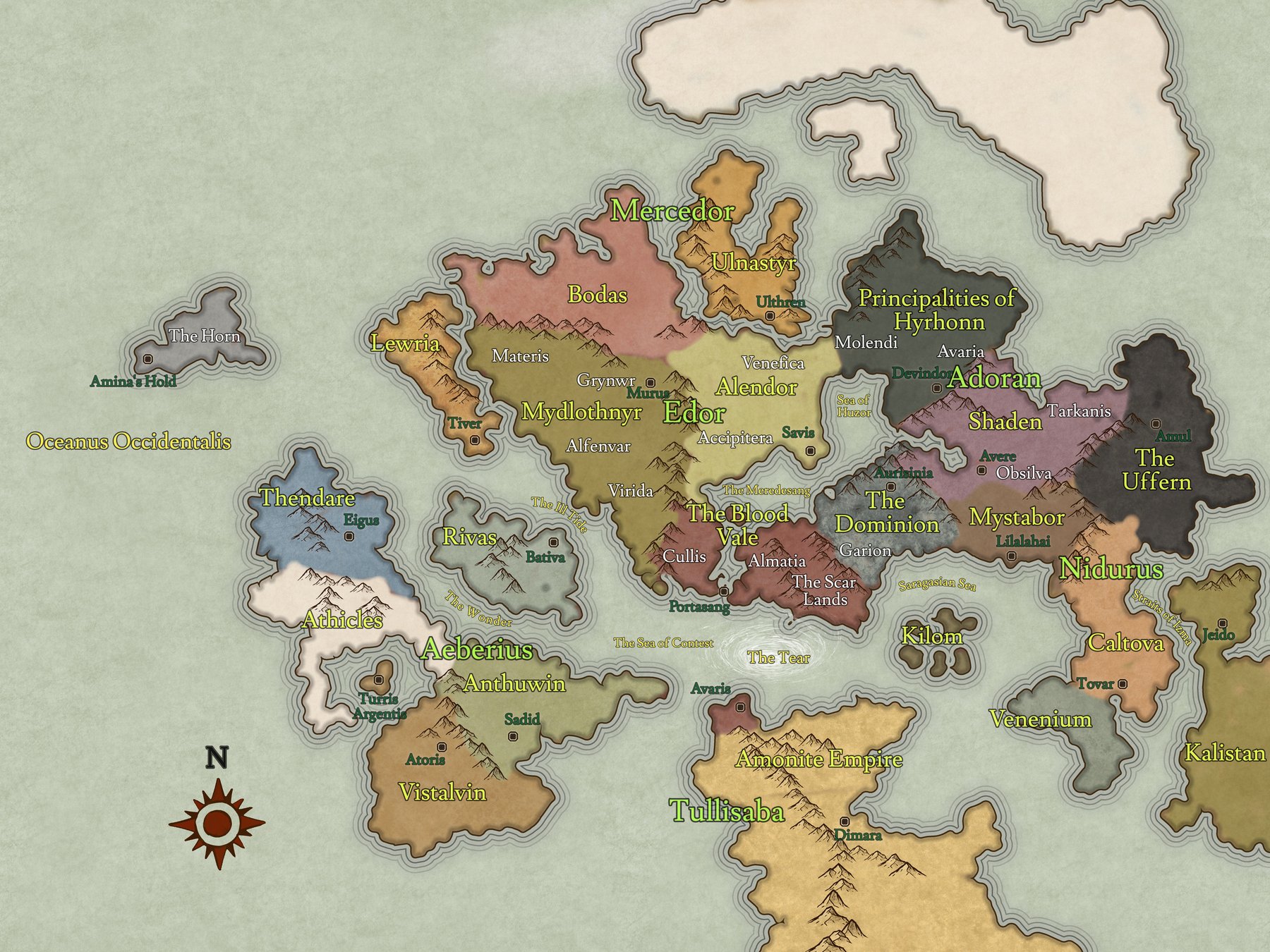
Map of Omner — current day
Omner — Current Day (1374 CA) · click to view full size
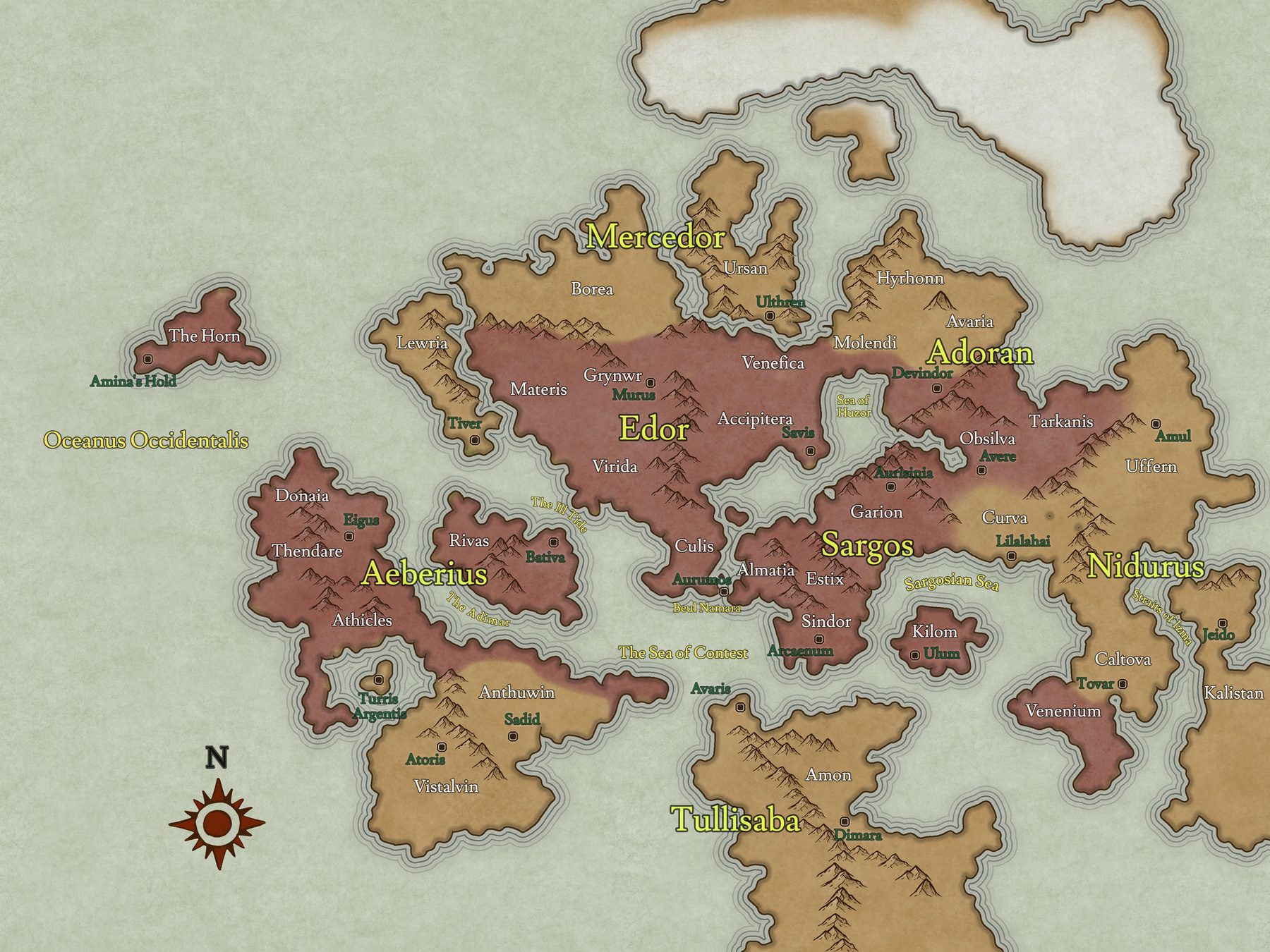
Map of Omner under Sargosian rule, before the Day of Rending
Omner Under Sargos — Before the Fall · click to view full size

The Game World for SAGE: Legend is one of Fantasy, but is an "elseworld" Earth. It is not Earth, but for all intents and purposes, it has a single moon, a 365 day calendar, etc. It is populated by a variety of fantastic creatures, species, and magic is common, if dangerous and strictly regulated by political and powerful forces. Gods are real if distant. Demons influence mortals to gain the power of their soul.

Technology is equivalent to the late 1200's Europe. Gunpowder is a thing, but rare, and not used in warfare save for wall defenses of powerful keeps in wealthy kingdoms. Technology saddle sits with Magic, and certain technological advances exist here that without magic, likely would never have been developed. It is also true that some technologies, due to the prevalence of magic, have been stymied, or unrealized.

For example, Apsychomancy allows mages to propel force in a fixed pattern, essentially serving as a power source of mechanical movements. There are Crossbows designed to be quickly loaded by the use of Apsychomancy, cloaks that have been woven with alchemical weaves to be resistant to fire, harnesses in metal armor to defray and ground out electricity, and sailing vessels with linked oars for automated propulsion.

A renaissance has begun in the world, and magic is fueling it.

The Crown Jewel of Old Sargos

The Blood Vale

Map of the Blood Vale
The Blood Vale — click to view full size
The Blood Vale is a land of contradictions—a bastion of trade and power, yet marred by scars of war, disease, and ambition. Dukes scheme in gilded halls while adventurers risk life and limb in the wild Marches. Portasang, its crown jewel, pulses with wealth and intrigue, a city where kings, mages, and priests all vie for dominance. But beneath its surface, ancient magics stir, old grudges fester, and the thin Veil to the Scarlands threatens to tear anew. Heroes here are not born—they are forged in blood, ambition, and the ceaseless struggle for survival in a land at the edge of destiny.

In the aftermath of Sargos' fall, a new age of peril and opportunity has dawned. The collapse of trade routes and the devastation caused by the Ichor birthed smuggling networks, black markets, and primitive advancements in tools and alchemy to counter labor shortages. Adventurers now roam the fractured lands as agents of change—employed by lords to recover lost relics, uncover ancient magics, or root out emerging threats. Yet, while kingdoms feud and the Dominion rises, a greater danger festers in the shadows. The Uffern's armies stir once more, and whispers speak of corrupted remnants from the Rending—ancient Fae or magics unleashed into the world. As new powers vie for dominance, the dark tide that looms on the horizon threatens to unite a divided world in common dread.

In all the world there is no place like the Blood Vale. It straddles the shores of both old Almatia, and Culis, divided by the Meredesang as it empties into the Sea of Contest. Its capstone city, Portasang, is the gateway of the world, and all trade from Edor and Adoran is passed on its journey by trade from Rivas, Thendare, and Caltovis. It is the last true remnant of the Sargosian Empire, and though it carries the prestige of its legacy, it is in no way bound by it.

All ethnicities and races have a presence in the Blood Vale, from the exotic to the mundane. All religions, systems of magic, philosophies, old grudges, and new, mix in a volatile cauldron of terse acceptance tempered only by a desire for trade, and opportunity.

The Scar Lands to the east are dangerous, yet filled with riches and the promise of adventure. The principalities that constitute the vale guard over uneasy borders, and hungry minor lords have ample opportunity and motivation to expand their holds. Where there are feuding minor lords there are mercenary companies seeking their own fortunes.

The Ichor, and the decades of war with Virida and Accipitera have left ample room for settlement and development. The conquest of Avaris in Amon has given the Blood Vale an alliance with Rivas, and they have begun to establish themselves as a new kingdom in and of itself.

The Keepers of the Gates, and the Mage Colleges of Bardsey, both call the Blood Vale home. Both are powerful institutions in their own right, but their presence only serves to underscore the growing strength and influence of the Vale at large.

Nine Dukes, One Grand Duke

The Duchies

The Blood Vale is comprised of nine duchies, each ruled by a Duke, and each holding any number of Counts who administer the counties, and Barons who are charged with the knights, soldiery, and defense of the principality. Each Duke holds the right to nominate the Grand Duke who serves for life. The duchies of the Blood Vale are largely ordered around hereditary lines from the tribes of Mydlothnyr, Alendor, and the remnants of Sargos.

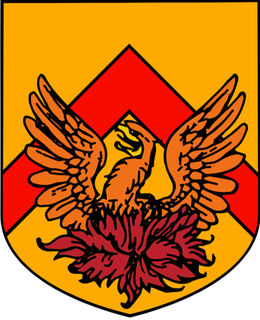
Duchy of Bryn

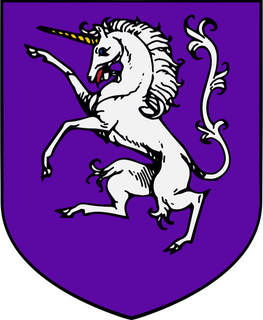
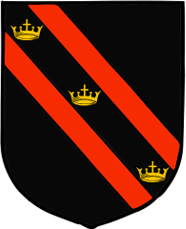
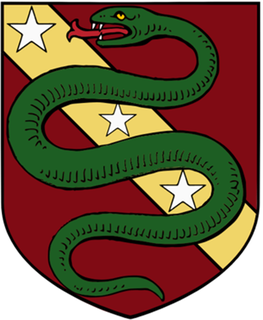
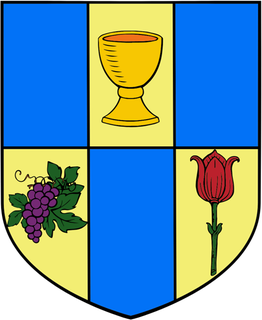
Coat of arms of House Corbin
House Corbin
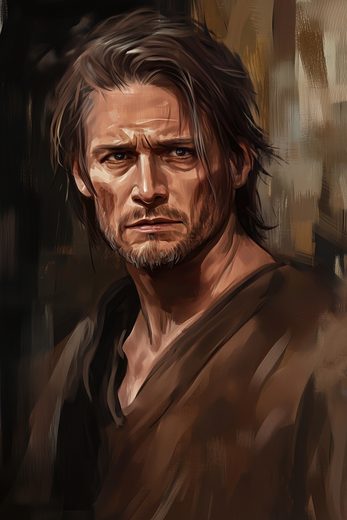
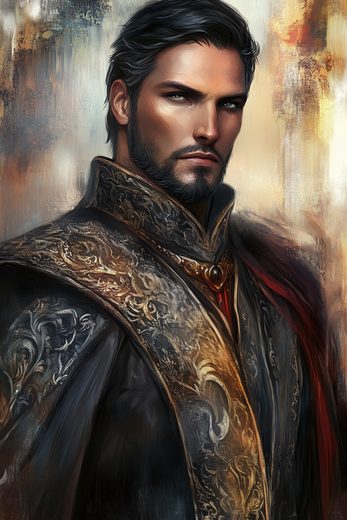
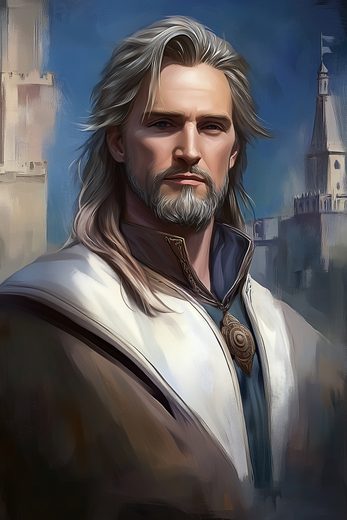
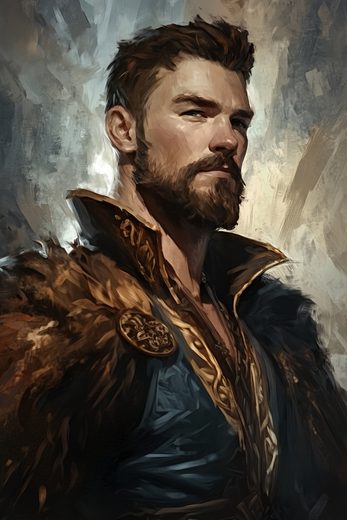
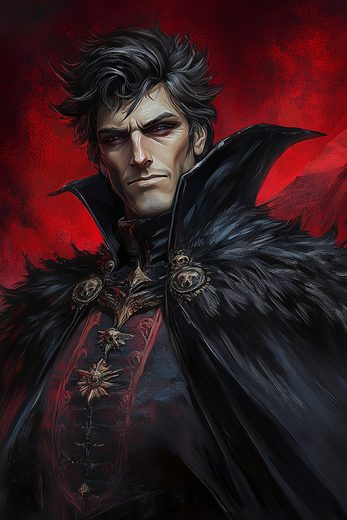
Duke Gerus Corbin
Duke Gerus Corbin

The Cullis people were the oldest line of humans in the Blood Vale, and were often locked in conflict with the Almatian elves. Over time, the Cullis tribes were conquered, or intermarried with the Viridans that migrated eastward. The landscape of Bryn is dotted with old Cullis ruins and forts, temples erected to gods long forgotten. The people who live here now speak an odd dialect of Mydlim, and are a reclusive people. They are considered the black sheep of the other Mydlothnyan provinces.

Duchy of Addewid

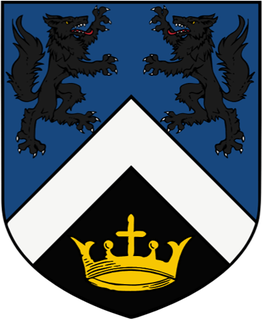
Coat of arms of House Dyfen
House Dyfen
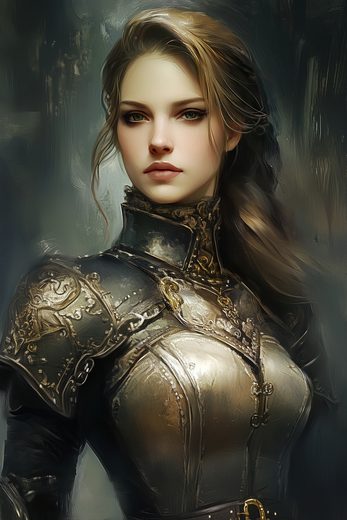
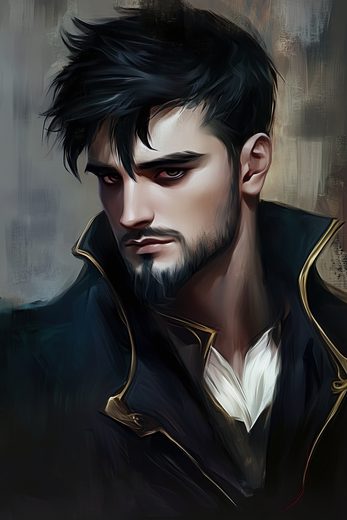
Duchess Ceri Dyfen
Duchess Ceri Dyfen

Addewid is the largest of the duchies, and its people are a diverse collection of representative cultures that have flowed in, out, and through the duchy over the past century. Cullis refugees from the south, Mydlothnyan settlers from the west, and Accipiteran settlers from the north, all make for a mottled tapestry that is often at odds with itself. The copper mines, rolling fields of barley, and hilltops adorned with windmills, make for an economically diverse and thriving region. Addewid is considered the heartland of the Blood Vale.

Duchy of Almeia

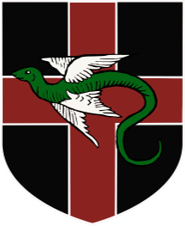
Coat of arms of House Chevin
House Chevin
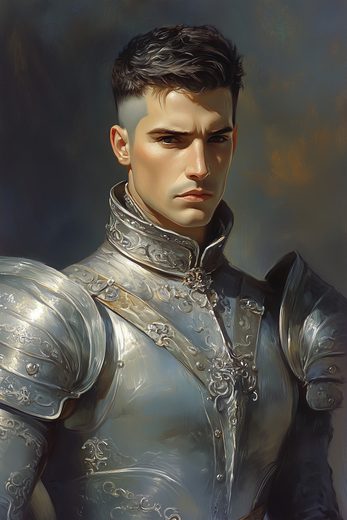
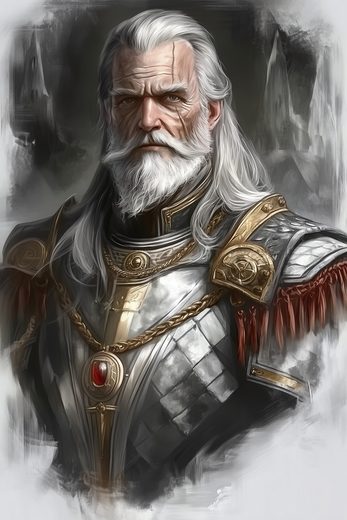
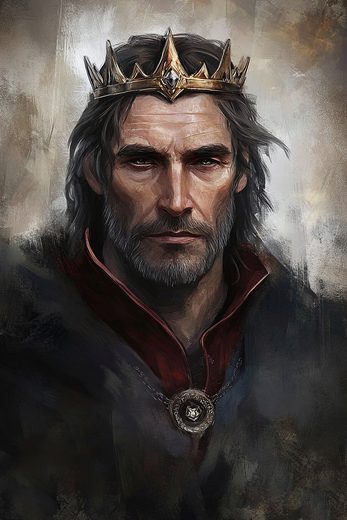
Duke Remular Chevin
Duke Remular Chevin

Almeia has long been home to Accipiteran settlers, and is a stalwart supporter of the Colleges of Magic. Nearly all the lords of Almeia contribute their second born sons to the Colleges. Almeia has also seen its fair share of entrepreneurial adventurers come to the region as entrances to a vast underhome of a city believed to be of the age of the Titans has been found. Scholars, explorers, and tomb raiders are scouring the Corde Epaisse looking to find treasures, lost knowledge, or ancient magics. The lords have also taken to requiring such groups apply for and purchase writs, and some even have taken to a lottery system for delving rights.

Duchy of Dwyfer

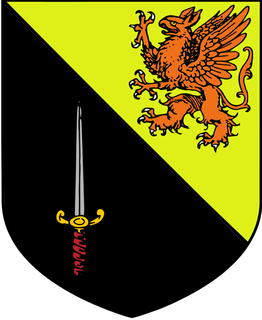
Coat of arms of House Reese
House Reese
Duke Kai Reese
Duke Kai Reese

Dwyfer is the purported home of the heirs of Rikard who fled here in 920 CA. It is a staunchly Mydlothnyan hold, although it has seen its fair share of immigrants from Alendor and old Sargos. The line of Rikard has been broken into the noble families of the Kendricks, and the Rikardsons, but they have intermarried with other lords of the Blood Vale over the last ten generations. Dwyfer is a dreary place of thick forests, moors, and seemingly perpetual gray skies. It does have a fair amount of silver mines which affords the territory some level of wealth and prestige at court, despite most other lords considering it a place of criminals, poor breeding, and backward thinking.

Duchy of Cavala

Coat of arms of House Gaspar
House Gaspar
Prince Francois Gaspar

Cavala, jewel of the Blood Vale, is covered in rolling fields of wheat, deep deposits of gems, and gold, and a major trade port that controls the flow of goods to and from Alendor. It is the home duchy of the Gaspar family, whose patriarch, Alphonse Gaspar, has ruled as Grand Duke of the Blood Vale for over thirty-five years. It is home to artisans, the theatre, and all manner of high society, and cultural innovation.

Duchy of Prisetlund

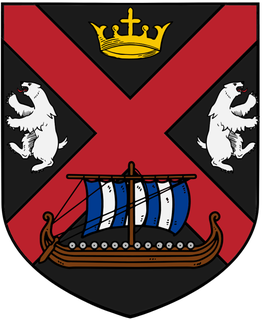
Coat of arms of House Skogan
House Skogan
Duke Lars Skogan
Duke Lars Skogan

When the Blood Vale was fighting a war of independence from all comers, an Ulnastyran warband came to raid the coasts while the major armies were distracted. But Accipiteran soldiers made the grave error of trying to stop the Ulnastyrans, and only served to make an enemy. Soon, the forces of the Blood Vale began to count the Ulnastyran raiders as allies. When the war was done, Jarl Kjell Sivers was given his own territory, and joined the table of dukes. Today, Prisetlund is a provider of mercenaries and soldiery, and the bulk of the Mercenary Guild call Prisetlund home.

Duchy of Karaktos

Coat of arms of House Ravenus
House Ravenus
Duke Linus Ravenus
Duke Linus Ravenus

Karaktos, highland moors bordered on the east by expansive alpine forests that scale up to the midrise of the Arpasian Mountains. The land east of the Arpasians is the desolate Alabaster Sea, a region of blasted deserts and cursed undead. The people of Karaktos are hearty and independent, and Sidhe of the long dispersed Almatian people still linger in the region. The massive Alabaster Sea still holds ancient ruins and treasures, enough to draw wayward adventurers to Karaktos to seek their fortunes, though most only find an early grave.

Duchy of Lithos

Coat of arms of House Ostia
House Ostia
Duke Hadrian Ostia
Duke Hadrian Ostia

The Lithos valley is rife with fertile plains sprawling in the western shadow of long cold volcanoes. Its limestone quarries from the Whitespine Mountains line all the manor homes and temple exteriors of the Blood Vale. Lithos is home to three dragons: Acheron, Xasinax, and Doro. It is ruled by House Ostia, a family that contributed more than a dozen Sargons. Despite the wealth of their lands, and the weight of their name, Lithos has been a stalwart supporter of the Grand Duke. They envision a Blood Vale ascendant, one that can achieve far more than Sargos ever could; unbound by the hubris of legacy.

Duchy of Thume

Coat of arms of House Porcius
House Porcius
Duke Ilmarus Porcius

Thume stands vanguard over the Marches, and is a land of equal parts opportunity, danger, and intrigue. East of Thume is wildlands populated by dangerous wildman tribes, remnants of the Almatian empire, agents of the Dominion, and all manner of fae and beast emboldened by the ripped Veil that stretches from the Scarlands. It is a place where the rule of law is impotent to enforce, making it home to all manner of smuggler, criminal, and renegade mage. This makes it an ideal home for the adventurer, the crusader, and the explorer.

The Marches

The Marches are swaths of land that is considered frontier, or hinterland. While the Blood Vale court assigns each March a Margrave to secure it, settlers and commonfolk are scarce in the Marches.

Estermarch — Marked by the massive forest of the Bellurwood, Estermarch, or East March, has the most settled regions in the frontier. These outposts benefit from the Margrave's huntsmen and wardens, but there are reports every month of goblins getting braver in their incursions closer to Thume.

The Salt March — The great salt lake of Sal Muria marks the border of the Salt March, and it stretches all through the deserts of the Alabaster Sea, and ends at the dark swamps of Vethik Mire. Its valleys are occupied by Ogres and Giants, its mountains give lair to at least one dragon, and only wildman tribes dare call this region home.

The Adder March — The Adder March contains the whole of Vethik Mire, and is the northeast extent of the Marches claimed by the Blood Vale. Here the Veil is thin, and Hags, Trolls, and ancient undead nest in the dark reaches. The Mire holds critical herbs and flora valued by alchemists and mages alike, their value commensurate with the danger in retrieving them.

The March of Calidus Fons — Marked by hot springs, picturesque lakes, and teeming with evergreens, the March of Calidus Fons has attracted recent interest from settlers. Silver has been found in the rivers and streams, and guilds, nobles, and companies are flocking to the area, despite the everpresent threat of raiders, dire wolves, and goblins.

The Gateway of the World

Portasang

The Arch Duke Francois Gaspar
The Seagates of Portasang
Portasang, the gateway of the world
Portasang — The Gateway of the World

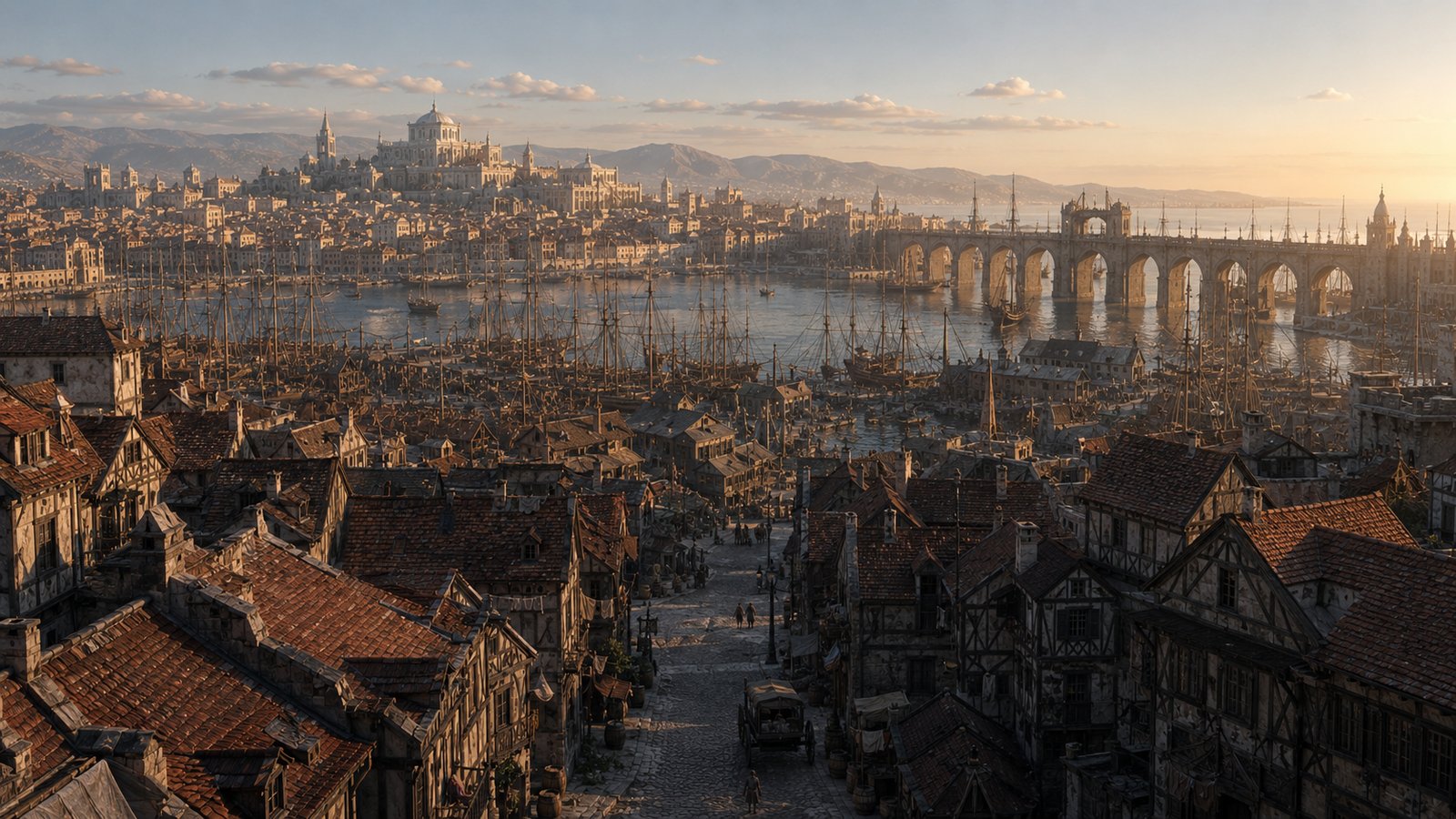
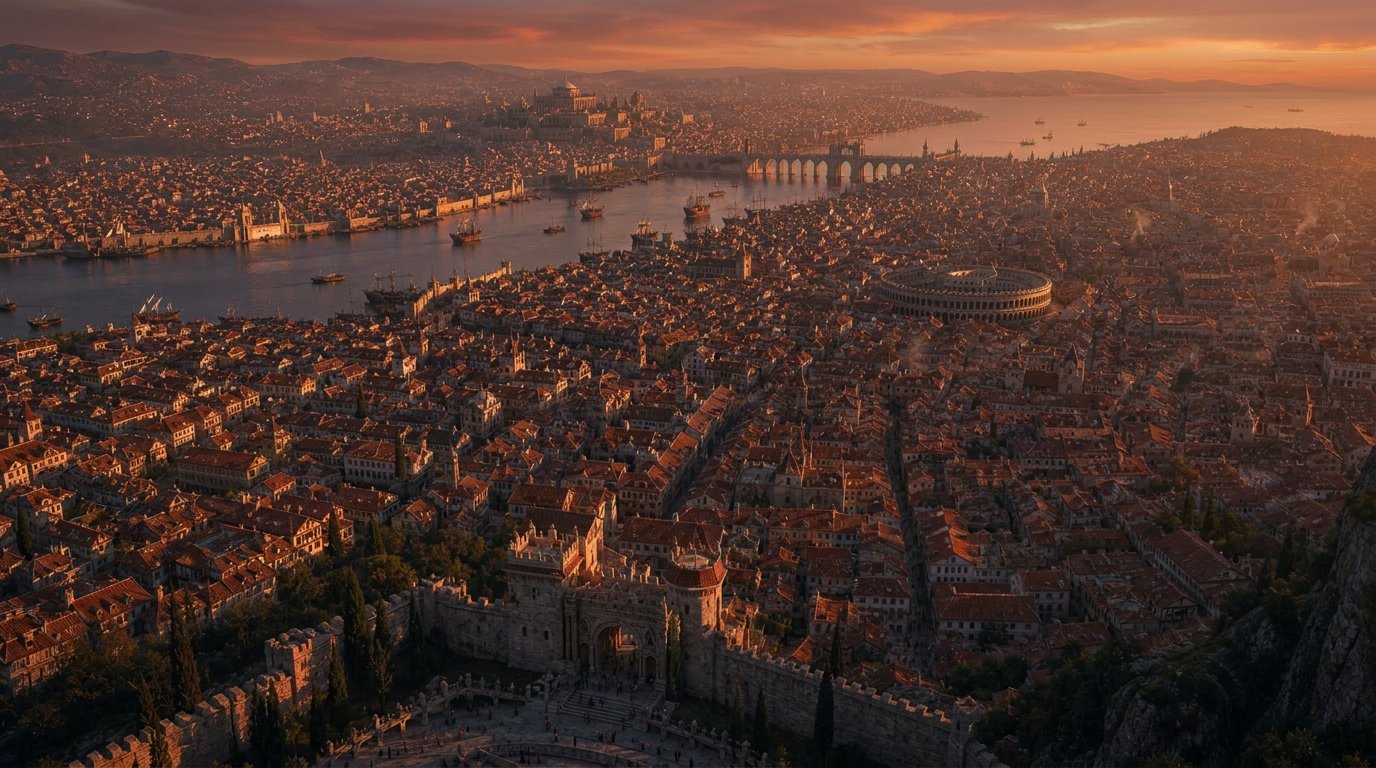
Once known as Aurumos, Portasang is the last remaining great city of old Sargos with the destruction of Arcaenum and Ulum. Portasang straddles both sides of the Meredesang that empties into the Sea of Contest. It is a natural throughway from which Edor and Adoran gain access to Amon, Rivas, Thendare, and the rest of the known world by sea. All merchants, all manner of goods, and all strikes of coin, at one point, have likely sailed through the Seagates of Portasang. It is a massive city, physically more expansive than Ullum was, and its architecture is uncanny in its diversity.

The heart of Portasang, its massive Seagates, are of a construction never before seen, nor reproduced since. Some say the Titans themselves must have crafted them, for the whole of their structure seems carved from a single massive sheet of limestone. This area of the city is unrivaled the world over for its immensity, precision architecture, and alien style.

Radiating out from the Seagates are the parts of Portasang built by Sargos during their direct rule of the region. Much of the trade and commerce of the city takes place in these sections. Sargosian sewer systems, copper plumbing, aqueducts, bath houses, theatres, and distinctive roads all make Portasang a modern city by all accounts. The newer portions of the city bear clear designs inspired by both Mydlothnyan and Alendorish settlers. They are mostly of timbers, with plaster and straw facades braced by crossbeams, and wood tiled rooves.

Today, nearly five hundred thousand people reside in the city and its outskirts. Denizens the world over reside in Portasang, either as resident, or temporary visitor. All manner of spices, invention, schools of thought, religions, systems of magic, cultures, criminal, and hero can be found in Portasang.

The Crownlands

The Crownlands are the provinces west of Portasang that stretch to the borders of the Duchy of Bryn. This land is the privilege of the Grand Duke, and he affords the other Dukes, Counts, and major families land plots for estates near the capitol. This territory is often used as rewards for loyalty and gifts of the crown. It is well patrolled, and only the very wealthy, the very favored, and their attendants can reside here.

The Mudflats

The Mudflats refer to the delta that sprawls eastward outside of Portasang. It is a region of the destitute, of criminals, and the diseased. Despite being in the shadow of the greatest city of the known world, the Mudflats show the disparity between those with power, and those without. Few come here willingly, and even though only to conduct some nefarious business, conscript some thugs, or hide from the authorities.

Gull Island

When the Blood Vale and Rivas conquered the Amonite city of Avaris, thousands of Amonite refugees made for the mainland. While Portasang is a cultural patchwork, Amonites are the subject of superstition and fear from the common folk. Many Amonites were relegated to Gull Island, and it has become a place known for gaining ill-gotten goods. Over the last few years the Amonites have established a level of self governance on the island. The schism between these refugees and the Blood Vale is only growing, and it is only a matter of time before either side seeks to forcibly change the dynamic of the relationship.

As Compiled by Sargos

Known History

Many of the names of the lands conquered by Sargos are Sargosian terms that described the people or the region. The people of southern Mydlothnyr wore green cloaks, and thus the land was called "Viridia," Sargosian for Green.

These works are the product of Aroditus, a former slave to Sargon Brutos Anagosi. Aroditus is respected for his dry and candid perspectives. Originally from Tullisaba, Aroditus was mistrusted by Anagosi's court, but the Sargon was rarely without his favorite historian and chronicler. Although he survived two successions, he was executed by Vilneus Carnifex Sero, the last Sargon of the Empire, in 1170 CA.

The Rise of Sargos

Although the Count of Alensary (CA), the official calendar of the western world, was not implemented until hundreds of years later, it considers the first year of its count as the founding of the nation of Sargos. The nation was thus named sometime after the death of Sargon himself, which is estimated to be in the year 22. While exact dates are not pristine, these estimates are considered reasonably sound by most scholars.

What no scholar disputes is the fact that Sargos was the first true nation of the mainland, and its founding launched the Age of Empires.

The Formation of Sargos

A joining of disparate tribes and people under a common cause, a single banner, and a complex system of rulership, were hallmarks of the ascendancy of Sargos. Although many can argue that this had been done in Kalistan, Amon (Tullisaba), and by many accounts even Thendare, few can deny the efficiency, and capacity to execute a vision, as Sargos.

Sargon himself had no heirs. If he had, a traditional monarchy would have developed, and Sargos might never have achieved the greatness in store for it. With his death, the three kings of Estix, Garion, and Sindor briefly ruled as a council. But ambition and infighting almost doomed the young nation as power struggles threatened the tenuous alliance.

In 30 CA, Malaius of Garion, and Hestor of Estix, joined forces against Aurelion of Sindor. Aurelion was the nephew of Sargon, and considered the biggest political rival to the others on the council. Aurelion, old yet seasoned, defeated Malaius and Hestor at the Battle of Arcaenum. Aurelion combined superior infantry maneuvers with specialized mages to divide his enemies. Malaius and Garion surrendered, and instead of having them executed, Aurelion installed them on his first council.

Aurelion gave himself the title of "Sargon," which went on to become the honorific title of all the kings, and eventually emperors, of Sargos. He instituted a shared powers government, wherein the old chieftains of the lands would serve on a council as Patrons. And the free people of the land could elect a representative democratically in a council of Commons.

Combined, these two groups would form a Senate. The Sargon controlled the armies, and the Senate controlled the coin, and the election of the Sargon, which would be a lifetime appointment.

The Kilomite Wars (45 to 67 CA)

Sargon Marcus Kassitor led the lucrative campaigns to bring the wealthy island people of Kilom as the first Sargosian province. Sargos, while initially overmatched by the Kilomite Navy, once again deployed specialized mages to turn the war in their favor. Their use of Hydromancers to churn the seas, and Aeromancers to propel their sails, revolutionized naval warfare.

Unarna, patron goddess of Ulum, was incorporated into the dominant religion of Sargos, joining Ultor of Sindor, Avenal of Garion, and Elberick of Estix.

Ullum served as a wealthy port, and seat of trade, for the Sargosian Empire, securing rare goods from far eastern lands.

The Almatian and Rivan Campaigns (72 to 85 CA)

Sargon Lasito Orcalum set an ambitious campaign to consolidate control of the Sea of Contest, further hedging out and isolating the Amonites of Tulisaba. Fresh with Kilomite naval innovations and supported by Sargosian magics, Orcalum laid siege to the rich city of Aurumos and the Almatian tribes.

Rivas, keenly aware of the growing might of Sargos, agreed to be incorporated into the Empire as a province, rather than prosecute a costly war. In exchange, Rivas would pay annual taxes to Sargos, allow for a provincial governor to serve on council with the Rivan King, and Rivas would occupy a seat in the Sargosian Senate; its Senator appointed by the Rivan ruling family. The Rivan religion, Domseras, was unmolested by Sargos.

The March of Lucas and Valia (87 to 109 CA)

Lucas Tyrantor and Valia Desangis were generals of equal repute, and as Sargon Orcalum was nearing his end, both vied for the attention of the Senate. Valia pressed a campaign into the heart of Thendare, seeking to take the Turris Argentis, a tower of gleaming silver that housed, by some accounts, untold fortunes and powerful magic. Lucas kept to the coasts of the Adimar, establishing outposts, and sieging Eigus.

The Thendarens were a collection of autonomous city states, and Lucas had a reasonably easy time taking hold after hold, as the Thendarens let age old animosities keep them from banding together. Valia, however, found that the people of the Athicles region were sworn defenders of the Turris Argentis, and their magics, and favor of their gods proved more than a match for her forces.

While Lucas was successful, and Valia suffered a humiliating defeat, the journey home saw Lucas' fleets destroyed by storms. Through savvy political maneuvers, Valia's supporters successfully declared Lucas' destruction a sign from Unarna, and Valia became the first woman Sargon in 111 CA.

The Campaigns of Edor (130 to 400 CA)

The push to take the lands of Edor stretched almost 300 years, and over 40 Sargons came and went in this time. Sargos was rich in trade, and unanswered militarily in the regions they held. The Amonites of Tulisaba were quiet, and save the occasional rebel uprising, silver, wheat, and exotics flowed to Arcaenum unabated.

The military campaigns in Edor also sent scores of slaves and precious resources into Sargos. Arcaenum, Ulum, and Aurumos became opulent seats of power. The installed Sargosian governors, over decades, each in turn gained a sense of entitlement, and began feeling more and more emboldened. Their support for the military in Edor was fickle, and they began courting the generals afield for their own political purposes.

The seed of the corruption that would eat away at the heart of Sargos had begun to germinate.

136 CA: Battle of Medim's Pass — Sargosian armies are routed by the mages of Venefica, halting their push into the ancestral lands of Alendra. This defeat would lead to the establishment of the Lictors, an order of Sargosian knights trained to counter powerful sorcerers.

162 CA: Fall of Savis — The mages of Venefica, effectively countered by the Order of Lictors, fell to Sargos, leaving the rich city of Savis in Accipitera open for siege.

203 CA: Battle of the Valgar — Sargosian armies were slaughtered to the man in the dark forests of the Valgar in the rough northlands known for the bear worshipping warriors: the Ursan. The defeat was so clear that stories of it disrupted faith in the Sargosian armies, causing minor revolts to break out. Sargon Akaidus ruthlessly put these down, and began the brutal practice of impaling usurpers along the Sargosian roads. By 209, the revolts had ended entirely.

238 to 400 CA: The Capture of Western Edor — Abandoning the northern lands of Mercedor, Sargos put all its focus on western Edor. But while the tribes and peoples were as divided as old Thendare, their knowledge of the land, and their faith in their gods proved formidable. The people of Culis were skirmishers who refused to engage Sargos in open fields, and would instead lay ambushes, or strike their camps at night with assassins.

The green cloaks of Viridia united their tribes into a large army, and while formidable in numbers, and united in a nascent national identity, proved too inexperienced to be a match for Sargos. While it took over 150 years, Sargos finally brought all of western Edor to heel with the fall of the great walled city of Murus.

The Pax Aeterna (456 to 659 CA)

Sargon Crassix Rito Alensus was a luminary of his age. With a massive and sprawling empire he began instituting a series of reforms to manage the empire into the next age. His programs aimed to root out corruption, increase education of the masses, and authorize provinces to train and form their own armies under Sargosian rules and requirements.

One of the principle causes of unrest were the disparate religions and gods that had filtered in to the Empire.

To manage this, Sargon Alensus instituted a new Calendar for the Empire, and named the months of the year after the prominent gods of the conquered lands. The four main gods of Sargos held the most important months (equinoxes and solstices), and he named the first month of the year after himself.

The "conquered" gods were organized into one religion. At the time they were called the "Parvadei", or the "small gods." He installed a head of this church, and it gained political recognition. While this curtailed persecution to a large part, many of the old world purists struggled against this change. In time, the Parvadei became known as "The Nine," despite their number being far higher in the inception of the Parvadei.

Some two hundred years later, the old gods of Sargos saw their influence waning as the Parvadei grew stronger and more accepted. By 653 CA, following the example set by Sargon Alensus, Sargon Malleus Kell reorganized the Sargosian gods under a new religion: The Keepers of the Gates. As Sargon Kell named himself High Pontiff of the religion, the Empire fell into an existential crisis as riots and revolts brought the Pax Aeterna to an ignoble end.

The Undying War (662 to 694 CA)

At the height of the religious unrest, Sargon Malleus Kell was assassinated. Evidence pointed to Amonite cultists, which in turn inspired the new formed Keepers of the Gates to declare a Holy Crusade in retribution. Malleus, in death, became an object of worship. His hammer was carried as a banner and holy relic. This would be the moment that Sargos finally brought their age old enemy under their boots.

Although Sargos and Tullsiba had come to blows on the mainland, and at sea, Sargos had never successfully landed on Tullsiba. In fact, Tullsiba did not engage in trade, and was completely isolated from the known world.

In a series of daring naval encounters, the bulk of the Sargosian armies landed ashore along the coast of Abishar in 673 CA, and constructed Fort Malleus. But this tenuous hold would be kept at horrific cost. Once on Tullsiba shores it became clear that the followers of Amon had mastered profane and terrible magics. For twenty years Sargos held Fort Malleus against wave after wave of undead hordes.

The number of undead at the command of the Amonites was unimaginable. The Order of Lictors proved a powerful asset in the war, as did the Sanctus Malleus, a group of religious flagellants from the Keepers of the Gates. By 694 CA it was clear that there would be no hope for victory, and Sargos abandoned their war effort.

The Amonites did not launch any counter invasions, and after Sargos fled, seemed to return back to their age old sleep, isolated from the world.

Historians, after the Day of Rending, have conjectured that the assassination of Malleus was an internal act, and the Amonites likely had nothing to do with it.

The Sack of Aurisinia (723 CA)

Thane Wullf of the Ursans led his warbands across Venefica and along the coast of the Sea of Huzor, built a fleet of warships, and rowed into the heart of Aurisinia. His men slaughtered the citizens, and made off with an immeasurable fortune. Sargos had been breached. Aurisinia, one of the five major cities of the Empire, had been laid low.

The High King of Mydlothnyr (852 to 921 CA)

Gareth Rikard of Grynwr led a revolt against the Sargosian hold of Caer Dalvis. He, and his seven men, slew the twenty soldiers in a pitched battle. No one knows what compelled this young man of barely sixteen to raise such a rebellion, but his name, and deeds, spread like wildfire across West Edor.

Sensing weakness with the fall of Aurisinia, the region chieftains began to flock to Gareth Rikard, and within four years, they had routed Sargos off their ancestral lands. The tribes of Myd and of Loth united in one land, and under one king, High King Gareth Rikard.

His rule inspired songs, ballads, poems, and his trusted circle of knights and mages became legends unto themselves. Mydlothnyr had been born a new nation.

High King Rikard had a vision granted him by Annwn, his goddess, and she bade him find the lair of Igwylff the Red, the ancient scourge of Edor, and recover her cauldron so she could heal the world of illness. Rikard never returned from this quest, nor his companions. Civil war soon erupted as his son, Aenaeris Rikard, was deemed too young to be King, and his mother, of Accipitera, was untrusted as a foreigner. The line of Rikard fled south past Viridia, awaiting their patriarch's return.

But in the tumult, Sargon Caius Orcalum arrived with three legions and quickly returned Mydlothnyr to Sargosian rule, ending the age of Rikard by 921 CA.

The King of Shaden Kneels to Sargos (1165 CA)

After centuries holding the line against the goblin hordes of the Uffern, King Gargeros IV of Shaden beseeches Sargos for support, and agrees to abdicate the throne to a Sargosian governor in exchange for military support.

Tomes of theories and speculation surround this pivotal event. They range from King Gargeros being mind addled and tricked into succumbing to Sargos, to plots involving crones of the Vagande seeking to usurp the king with a more ancient line. Most, however, concede that the people of the lands of Shaden were desperate after years of blood and terror, and simply begged for aid.

Sargos inducted the lands of Shaden into the empire, and to their word sent four legions to rebuff the encroaching goblins of the Uffern.

With Shaden joining, the holds of the Sargosian Empire grew larger than they ever had before, now holding the bulk of Adoran. Sargos had achieved an empire that spanned across all oceans, and upon which the sun would forever shine.

The Fall of Sargos

The following accounts are collected from the epistles and Ducal reports since the fall of Sargos. Although these events are fairly recent, much of the fall of Sargos is speculation. No one was there on the Day of Rending, at least none that live and can tell the tale.

The decline of Sargos was slow and by inches, but its fall happened all at once.

The breadth of the empire was such that corruption was both inevitable and assumed. The governors, or Princeps, of the far reaches of the empire, were rarely held to account in Arcaenum. This built up resentment in the subjugated regions, and more and more the Sargosian barracks in these provinces were filled with local conscripts; their loyalty to the fatherland slim at best.

In its last years, this corruption was made manifest and clear by the last Sargon: Vilneus Carnifex Sero. Sargon Sero was cruel beyond compare, and had risen through the ranks of the Lictors as its most keen eyed Inquisitor.

A popular saying goes: Had Sargos not had the Day of Rending, it was bound for a Day of Reckoning.

The Day of Rending

Nearly seventy-five years ago the Empire of Sargos fell. Likely forever. The accounting of this day cannot be truly known, as none live who were there. But on the morning of Elberikon the 21st, 1172, the people of Arcaenum, jewel of the Empire, awoke and gathered for a day of festival. At some time before noon, the world shook. The land of Kilom was wrecked by massive waves, splintering it asunder, sinking Ulum into the sea. The northern coasts of Tullisaba, and the city of Avaris, were wracked by storms. And the entire peninsula of Venero, along with the capital of Arcaenum, were gone from the world.

Over a million people resided in Arcaenum, some five hundred thousand more along the fertile peninsula, along with the revelers who had come far and wide, all gone, all at once; their very souls unreachable by the most powerful necromancers.

Those near the region were stricken blind and deaf, and all that could be gleaned was that there was a flash of light, and an earth breaking boom, and the world around them shook as if its very foundations had broken free.

What remains of the region is known now as "The Tear." The waters seethe and churn. Eldritch storms brew in a tumultuous maelstrom. All that remains of the peninsula is blackened rocks as they melt into the sea.

The greatest art, writings, and treasures the world over, gone.

As word spread of the mystifying event, priests began calling it a sign from the gods. Sargos incurred the wrath of the immortals. But the wrath would not be limited to Arcaenum, nor Sargos alone.

The Ichor

The Ichor was a disease of horrific calamity. Black liquid would pool in the eyes, and seep from the pores, and be expelled in coughing fits. Victims would drown in it within weeks in a slow and agonizing death.

The Ichor spread faster than word of the Rending, for the two were inflicted on the world hard upon each other. Many believe the two events were related, so profound were their impact on the world.

Anywhere that Sargos had kept grain stores become sites for epidemic, leaving only the most rural, and fringe elements of the empire free of illness at first. But even this proved only a delay as accounts of the Ichor's touch come from as far away as Caltova, and Anthuwin.

By 1184, whole peoples, tribes, and regions had been annihilated.

On the 27th of Ultorim, 1185, Annwn, Fey Sovereign goddess of the wilds and the harvest, appeared in the Matria region, and healed all who swore to protect the land. There was an eruption of similar miracles of other gods: some true, some invented.

But this return to faith to gods of the Parvadei was inexorable as the Keepers of the Gates began to quickly lose favor in light of the twin catastrophes of the Rending, and the Ichor.

After the Fall

Sargos ruled its provinces in a system of land ownership. Governors could parcel out land to reward loyal local chieftains and petty lords, or leave it unmolested in exchange for order and taxation. The Governors controlled the grain, and the Sargosian Legions in the territory. Each Governor also had a cadre of Lictors on hand to regulate magic from the locals. The taxes and grains they levied were sent, largely, to Arcaenum, or to Aurumos.

This system existed in some territories for almost a thousand years. The Governor's manor, and the estates of their proxies, become centers of authority, food, wealth, and military power. While all were citizens of Sargos, regional identity still existed, and in some regions, encouraged.

With the end of a centralized Sargosian rule, and the terror of the Ichor, the various provinces were forced to navigate treacherous and unfamiliar waters.

Sargosian Legions became warbands led by power hungry, or opportunistic Princeps. Regional Governors held on to power, or brokered support from remaining Legions, or Lictors to keep it. Some regions saw locals overthrow lightly held forts, upending old ways.

An empire, once anchored in a homogenized language, culture, and lordship, had become a fractured patchwork of small regions governed by those with the sharpest steel, or the most dangerous of magics.

What emerged, after years of horror, disease, famine, and chaos, was a fundamental shift in self-governance. Regional identities became important, and intolerance for outsiders and foreigners became a shield to ward away disease and warbands.

Furthermore, the system of labor, where slaves were plentiful, was impacted by the Ichor. Manpower became a scarcity. Which in turn led to famine.

Aurumos and the Valley of Blood

Aurumos, Golden City, the third, and only, remaining jewel of the Sargosian Empire, was saddled between the mouth of the Meredesang, between the regions of Culis and Almatia. All trade from the Sea of Contest moved north through the city, and all trade from the mainlands moved south through the city. It stood at the confluence of the world. It was in the vicinity of Aurumos, on the Isle of Bardsey, that the last untouched vestige of Sargos resided: The Colleges of Magic. This left Aurumos, and its region, as the last bastion of Sargos.

The governor of the province sought to establish authority in the ensuing chaos, and sent word to the provincial governors that their taxes would produce the regions and mages needed to restore order and combat the Ichor. Some complied. But while the coffers of Aurumos remained flush with silver, they had not the resources to fulfill their promises.

The land owners of the valley were comprised of Viridian and Cullis natives, old Almatian lines, Sargosian governors and nobles, and even some tribes from Accipitera. They rose against the provincial governor in a political coup and dispatched him without incident.

But the governor's action had provoked the various warlords from across the empire. Not only had Aurumos failed its promises, it was known to be teeming with wealth, resources from across the world, and perhaps more importantly, the symbolic inheritor of Sargosian rule.

Bands of free companies, reformed former legions, influential Princeps, and petty lords, all formed coalitions to sack the golden city.

From 1181 until 1211, the lands of Culis and Almatia were besieged by land and by sea. Even fleets from Rivas, largely intact after the fall of Sargos, made a play to take the seat for themselves. But the regional land owners, combined with the formidable might of the Colleges of Magic, kept the city from falling. It was two decades of unheard of bloodshed, with the blood of dozens of armies, tribes, and free companies from all over Edor and Adoran. This earned it the name "The Blood Vale," which has been embraced by the regional lords.

The victors decided to make a symbolic break from Sargos, renaming the city Portasang (The Port of Blood in old Accipitera). Each lord of the Blood Vale, or Duke, would serve on a council akin to the old Sargosian Senate of lords. They in turn would elect a Grand Duke to preside over the vale, but reserved the right to remove them from power through the same electoral process.

Aurisus and The Dominion

The events of the Day of Rending are woven into the tenets of a new, and powerful movement in the world: the Aurisians. They hold that Aurisus was a god made flesh, who came to the world to usher in an age of peace, spiritual awakening, and to end the old order. Aurisus taught that all the gods were nothing more than powerful demons, orchestrating the collection of mortal souls.

He had amassed a small but loyal following, and he had begun to be noticed by the Keepers of the Gates, as well as the Parvadei. Even inquisitors of the Domseras thought his sermons blasphemous and dangerous.

He was captured, and persecuted by the Keepers of the Gates. Accounts of merchants who left Arcaenum just before the festival claim that Aurisus was to be sacrificed that morning in the Temple of Mons Ardis, in the heart of the city.

His followers claim that his sacrifice restored him to his divinity, and the destruction of Sargos was the punishment for their lack of faith. This claim, in the tumult that ensued immediately after the Day of Rending, carried weight with the common folk.

The Aurisians, flush with massive troves of converts, immediately began taking control of what remained of Estix, and Garion. A new government was formed, one devoted to Aurisus, one that outlawed slavery. The former governors and land owners were stripped of their wealth and holdings. The freed slaves were ushered into the Aurisians, given purpose, and fueled with vision.

They carved out a brutal society; one where the church is the highest authority, and one without wealth or nobles. All would be provided. All would have sustenance. All would have a purpose.

All mages were sequestered and re-educated to serve Aurisus and Aurisus alone. Those who could not come to serve him in life would be sent to serve him in the afterlife.

The rise of the Aurisians, and the formation of what would become the Dominion, was fast, bloody, and cruel. The Dominion is an inhospitable place. Outsiders are not welcome unless they are loyal converts. And rumors persist of a gathering army to carry the word and wisdom of Aurisus across the world.

Regional Identities

After the tribulations of the Rending, the Ichor, and widespread famine; the former provinces began to coalesce around regional identities. From 1180 until the modern day (1374), kingdoms, principalities, and fiefdoms began to rapidly develop. In most cases this manifested into a feudal society, one based on military strength, not unlike old Sargos.

While many lands still practice the concept of people being bound to the land as serfs, the Ichor made these serfs valuable. Labor was not easy to come by. And the devastation of the Ichor saw whole regions and cities laid low.

Mydlothnyr — The lands of the two great tribes of Myd and Loth became known as Mydlothnyr, or "Lands of Myd and Loth." While the region is developing an identity predicated on the old stories of the High King Rikard, it is still largely a region of small feudal holds. Many of these holds band together just as easily as they feud against each other, and no central leadership has materialized.

Alendor — Accipitera and Venefica are undergoing a unification into their own kingdom: Alendor. Alendra's tomb is still prominent in the city of Savis, and her name and legends united the region during the dark times of the Ichor and the Rending. The region had produced some of the most talented wizards ever known, and it is the birth place of the Inner Pillar magic; largely considered the most dominant practice of magic. Of all the reborn regions, Alendor is best situated to become a dominant force in the restoration of the world.

Rivas — Of all the former provinces, Rivas was the least disrupted by the Rending, at least politically. The royal families of Rivas have maintained their stewardship since they agreed to enter Sargos as a province in 85 CA.

Shaden — Shaden teeters on the brink of annihilation. With support from Sargos gone, and ravaged by the Ichor, it is doubtful they will survive the next rising of the Uffern. It is rife with political unrest as the Gargeros line abdicated their crown, and the power vacuum has created chaos with disputed claims.

Ulnastyr — The Thanes of the Ursan people have become emboldened by the fall of Sargos. They had begun to actively raid the coasts of Alendor, and the mainland of Mydlothnyr, but withdrew once their marauders had brought the Ichor back home. The pestilence struck them hard in their homeland and their warbands have only recently begun to venture back out.

Thendare — The city states of Donaius were quick to establish themselves as a cohesive remnant of Sargos after the fall, even so far as to name Eigus as the new seat of the empire. Flush with purpose they set upon Rivas, demanding continued fealty. Prince Xander Tsokalius launched a fleet of five ships, but the three year war ended in decisive defeat at the hands of Rivas. But Atalya, daughter of Xander, has maintained a loose kingdom and continues to keep a tenuous hegemony over the region.

Athicles — Athicles has thrived since the fall as an exporter of trained mercenaries. Their free companies have been employed across the old world, even as far off as the Hyrhonn. An autocracy of military control, Athicles is a rugged land, but is still teeming with silver. They remain the guardians of the mysterious Turris Argentis. Though not a conquering people, their prowess and constant wartime footing has kept other kingdoms in check in the region.

Anthuwin — A wildland, never under the thumb of Sargos, Anthuwin is a sprawling savanna. Beastmen rule over these lands, predominantly Centaurs, although the Mngwa people are prevalent in the eastern reach. While the Centaurs are nomadic huntsmen, they have a few permanent settlements. The Mngwa make their home in Sadid, the City of Wonders.

Vistalvin — In the heart of Vistalvin rises the Whispering Spire, the mountain that sings. It is a lush and fertile land, and home to the Eldan folk. Initially, Sargosian incursions into Vistalvin were frequent, and their take of slaves profound, but it never became a province of Sargos proper. When the Whispering Spire was declared a holy site to Avenal, the Eldan became associated with her, and from that gained some level of reverence from the Keepers of the Gates.

The Scar Lands — After the Day of Rending, the lands of Sindor and Estix became known as the Scar Lands. Earthquakes, volcanic eruptions, and tidal waves wreaked havoc. This devastation reached as far inland as the remnants of old Almatia. Today, these are hinterlands that stretch between the newly formed Dominion and the Blood Vale. Ruins of cities, temples, and the souls of an entirely annihilated peoples litter these dark and foreboding reaches.

Venenium — Venenium was to be the new seat for a push into Caltova and Kalistan by Sargos. It took decades to carve out the region and push back Caltovan Minotaur Beastmen. But when Shaden joined Sargos, the Princeps of the field Legions deemed it a better home for their Eastward Campaigns. Venenium is now a small remnant of old Sargos, long detached from the mainland, and long unsupported.

Caltova — Lush with verdant jungles, Caltova is a mysterious land ruled over with alien lizardlike beastmen, Minotaurs, and secretive mystery cults in service to dark gods. It is home to all manner of exotics and riches, unspoiled by Sargos. The rarest poisons and venoms come from Caltova, and has survived for centuries against the never ending hordes of the Uffern.

The Uffern — Uffern means "Dark Seed" in Shadek, and this place has been the source of goblin and troll armies that every few generations come pouring into Tarkanis, Mystabor, and Caltova. Their numbers uncounted. Their organization unknown. The dark armies of the Uffern know only hunger and conquest, and the time for their rampage is nigh.

Bodas — Home of the Beastmen known as the Nemedians, Bodas is a bleak and beautiful reach of rolling tundras, impressive crags, glacier fed lakes and alpines. Their raids into Materis and Grynwyr are common, and Ulnastyran Thanes adorn their helms with Nemedian horns gained through great hunts. Should Bodas ever unify in war, the whole of Edor would tremble.

Lewria — Secluded and well guarded, Lewria is known as the Emerald Shore of Edor, and home to the Everking, Valenthar Eluminor, High King of the Sidhe people. Sidhe craftsmanship is without equal, and their navy, while small, is fast, and a terror on the seas. Even Sargos at its height would not dare invade the shores of Lewria, and the few warbands that have dared to do so have only a lifetime of enslavement for their efforts, or a swift death at best.

Mystabor — A massive black forest, Mystabor's ancient and deep woodlands are home to a reclusive kingdom of Sidhe. The Sargosians named these people the Curva, an homage to their long curved blades. Mystabor has long warred with The Uffern, fended off Sargos, and even skirmished with the Obsilvans of Shaden throughout its existence. It has never been conquered, and stands alone in Adoran; unallied. Prior to the Day of Rending, they had made trade alliances with Kilom, and even had emissaries in residence in Ulum.

Principalities of Hyrhonn — Molendi and Avaria straddle the West and East of the Hyrhonn Valley, and at its center is the towering Eisenberg, the entrance to the ancient underworld citadels of the Thorfor Dwarves. The Principalities of Hyrhonn are a loose confederacy of minor kingdoms, and is known for its invention and innovation. Arthgen, Faelord of Science, has long called the valley his home, and his influence is indelible. Spyglasses, Windlass Crossbows, and Blackpowder are some of the most recent scientific contributions from the region.

Amon — The Land of Tullisaba is known as Amon in the lands once ruled over by Sargos. Until recently, no one from Amon had set foot on the mainlands. But in 1228, the united forces of Rivas and the Blood Vale managed to conquer the Amonite city of Avaris, and slay one of the immortal Adonai. The locals of Avaris considered the invaders as liberators, and many Amonites have fled their ancestral home to come to the Blood Vale and beyond. They tell of monstrous Adonai Immortals that have the power to turn the living into vessels for the long dead, and rule with unspeakable terror and cruelty.

Kalistan — The dominion of the immortal Jade Queen, Kalistan is a land that resides on the border of the Fae Realm. It is a land of mystery, and rarely allows visitors. Exotic and beautiful, Kalistan boasts a deep command of elemental magics, and an equally innovative scientific culture. Some say they rival the scholars of Hyrhonn.

The Horn — The Horn is the home to the Knights of the Horn, a monastic order of Knights devoted to the god Ioris. Petitioners come from the world over to join their honored and celebrated ranks, but few have the temerity of soul, nor the humility of spirit, to earn entry. As rumors have spread of new lands found across the Widow's Sea, The Horn has become the last port of supply for wayward explorers and daring navigators.
From the Many Ages

Myths and Legends

Like all good stories, there was a beginning...

The world that is laid out here is one of immense wonder, miracles, mystery, tragedy, and hope. The heroes that set out upon it in search of their destiny and higher calling trod upon ages of unknowable history, but will write a new one all their own, and shape the world forever in their wake.

Mythology is what is purported to have come before, as passed down through stories and songs. While there may be scrolls, sagas, and tomes written of the time before, those in power control what is considered "history" and what is considered Myth.

For millennia, that power resided in the Empire of Sargos. And while it is now destroyed, its people scattered to its disjointed provinces; its legacy is powerful, and still shapes the framework of the world.

No one has a firm grip on truth. But truth can still be gleaned, and there is nobility in its pursuit.

The Ages

The modern age is one of revival and expansion. There is a tenuous peace across much of the known lands, which has fostered trade, learning, and investment in the arts and sciences. Some lands are at the forefront of these exciting times, and some are still rebuilding from past wars. But there is a dawning hope in the world.

There are places to discover. Seas yet unmapped. The ruins of lost civilizations have been purported to be found in the far reaches, and with it, long secreted sciences and magics.

But as civilizations race to capitalize on this age of opportunity, there are those who see peril on the dawn. Old magics were lost for a reason. The seas were long uncharted, for good cause. Some see shadows growing from the ambitions of men, and new marvels bring merely innovative ways to bring death and suffering to a still young world.

What follows is the collected writings of Donaeus Agrisum Callix, High Magister of the Libraries of Arcaenum, and personal Historian to Sargon Gaian Imperix Athis, compiled in the year 1174. The title of the work is Historia Regem Populusque Sargosi. Three copies were said to reside in Arcaenum before the Day of Rending, one copy in Ullum, three in Eigus, and two in Auromos (now Portasang). While Donaeus was a well respected author and scholar, he was known to have a flair for emphasizing the role of Sargos in the world, and relegating the conquered to debased depictions of drooling barbarians, or godless heathens. His works form the foundation of the educated world's understanding of the Age of the Fae, and of Legends.

Age of the Fae

What is known of this age, the first age, is the fodder for scholars and theologians. Although bards recount tales of steadfast adventurers stumbling upon ancient relics, temples, and even lost cities of the age; most assume this fanciful storytelling over a true accounting. But stitching together these conflicting tales, a glint of truth emerges, or at the very least, a legendary throughline.

The world once was cold. What is now sea was once land. It was an age of severity, cruelty, and bereft of all hope.

Some religions say the Fae crafted mortals, so great was their power at the dawning of the world. Other writings and stories speak of them as invaders who subjugated the world. What is shared in common with these scattered tales is that long ago, its age and length lost and forgotten, the Fae ruled supreme on the world, and humans served them.

Magics shaped mountains, carved out seas, and bent the world to their whim. They ruled as gods, and warred amongst each other, with humans as their armies.

The Legend of Gavenas the Bold speaks of the creation of the Nemedians by the Fae, merging man with beast, to create a fearsome army of powerful soldiers. The Kalistani Scrolls of Chensi tell of how they imbued humans with the soul of the North Wind, creating the Eldan people of Vistalvin.

At some point, things began to change. The Fae split into factions, some bent on the destruction of all mortals, others in protecting them. Some still felt that the world was the domain of man, and man alone, and it was time to leave the world entirely.

Humans were taught magic, and with it emerged as equals to the Fae who subjugated them. Some religions preach that it was the gods who aided mortals, and gave them the power to shuffle off the chains of their overlords. Though there are accounts of a powerful faction of Fae who brought power and wisdom to humans.

Regardless of how humans became so enabled, they won their war. The cost was dire. The seas became land, the land became sea, mountains broke, and a new world was born. Pacts were made, and the Fae retreated in to the twilight lands between worlds. Their dominance of the world, and of man, ended.

Excerpt from the Legend of Gavenas the Bold

As Translated from Old Ulnas

Born he unto the sealed path and home unto the strong of arm, Gavenas grew under the covetous eye of Avaena, Witch, and queen of the rime. Come hither me child, and all to ask will come unto you, and as payment and grant, to me shall gift but one in return. Gavenas asked for strength of bear and speed of elk, for warrior skill, dauntless, fierce, and unto him no equal in arms.

Avaena, cold as night, white as sea foam, would grant all and more but for Gavenas gift of his noble heart. Gavenas gave shout to all to hear that no creature of cold no witch of night could own a heart so fierce, so hot.

With righteous spurn he denied the rime queen, and with malice and spite she cursed him with the gifts of which he had asked. With horn of ram, and hoofs of iron, with arm of bear, and teeth of wolf. Savage heart and savage mind, a beast of night, to shout, to cry, Gavenas the Bold was broken low, and his howls now echo in the cold night.

The Arbiter's Oath

From the Litany of the Three Sovereigns

Magic is the safeguard of the world, and unto man the tool of creation, and destruction. As Arawn saw in his wisdom to teach mankind the shaping words, the focusing rod, and the song of creation, I shall prove worthy of such implements, and as those before me, defy the bondage of spirits and the corrupted. I shall be as temperate as Spring, as directed as the sun, and as firm as mountain roots in my duty and charge.

Bander and the Dragon

Almatian Legend

Unto Seolfer, god of sky and of storm, did the priests prepare a sacrifice of cattle. But Aslinax, a dragon red as flame, did swoop upon them, and carry them to his lair. Bander, with sling, with spear, and with bow, hunted Aslinax over river, over mountain, and into dark caves. In the darkness of the deep, Bander came upon Aslinax asleep; his claws as swords, his teeth as spears.

Bander filled a cow with pitch, with tar, and with hay. He surrendered to Aslinax and offered him the cow as feast, as homage and tribute to his greatness. Aslinax ate the offered cow, then gathered flame in its mouth to punish the lowly Bander for his trespass. But the fire from its belly did ignite the cow's innards, and in a flash of fire, and a boom of thunder, Aslinax was slain.

Bander returned with the sacred cattle, and a great offering unto Seolfer was sent into the sky. The people rejoiced, and Seolfer did bless them with long days and fortune.

Those of Earth, Wind, Water, Fire, Iron, Wood

The Scrolls of Chensi

Balixa the Jann of Earth, crafted them. To mine the deep of gem and gold, the fae shaped man into the dwellers of the dark. Strong of arm, with cunning and guile, they delved the mountains for their master's plunder.

Soreena, the Jann of Air, crafted them. To sing, to light, to raise the hearts, the fae shaped men into winged children. Voices like silver, to dance and to twirl, they gave light and gave joy for their master's grim souls.

Rettam, the Jann of Fire, crafted them. To fight the wars, and subjugate enemies, they were made with arms to strike the body, and horns to strike the heart. They served their master's conquest of their enemies.

Undra, the Jann of Water, crafted them. To sail the seas, guide the vessels, shepherd the fish, and bring the waves of wrath. With skin of silk, fins, and strength of coiled body. They served their master's rulership of the sea.

First Men: The Titans

Educated Conjecture on Collected Tales

The following is a topic of great interest of historians and scholars throughout the Empire, and was first made popular by Kiris of Adelor; noted magister of Thendare.

It is clear and true that mankind is the inheritor of the world, and the fae that torment the wildlands are usurpers, interlopers, and an enemy. Their pernicious incursions across the empire are dying gasps, that while dangerous, no more meaningful than a child denied their playthings. For at one time, this world was indeed their plaything; although, it was never their inheritance. The first men, who we shall call the Titans, were not unlike the gods.

Ruins of ancient cities belonging to them have been found in Edor, Thendare, and even Caltova. What few ruins have been found have awarded adventurers with plunders of wealth to make any regional governor jealous, and riches of intellectual pursuit to stir debate among scholars for generations.

What can be surmised is they were giants. That is to say, of gigantic proportions. By their skill and knowledge, apart from their size, they bear little resemblance to the giants of today. But that is not to say the two, and we as well, are not unrelated.

These Titans warred with the Fae, of that we are clear. Whether the way to the twilight realms was opened from this material and base world, or from the other side, is unclear. Nor is it clear who weakened the bonds of the veil such that passage was made so easy, or to what ends. But it is more than likely that the Fae, initially, posed little threat to the Titans.

In point of fact, many scholars, myself among them, believe that the two were at first as equals, and exchanged knowledge, and even developed alongside each other. But the Fae betrayed the Titans, cursing their bodies, and their minds. The weakened shells of the mighty Titans are the ruined rigor that holds up mankind today.

It is also likely that the giants that still walk the world are the Titans of old, cursed with a feebled mind, but retaining their girth and physical might. This made them easy to control by the Fae, and why so many serve them to this day in the Uffern.

The Age of Legend

While the sources that refer to the Age of the Fae are slim, and contradictory in many ways, the stories that bear out the Age of Legend are many, and widely varied. Largely, they speak to the developing people of the various regions of Edor and Adoran, their worship of their gods, and their struggles for land, resources, and against the terrors of the world.

Legends of Edor — Alendra and the Four Dragons

Alendra, first of the Sisters of Voyantis

Edor, or "The Treasure," in Sargosian, is the bulk of western Oris. From it come the tribes of Loth, and Myd, the sorceress Alendra, and many of the gods of Parvadei.

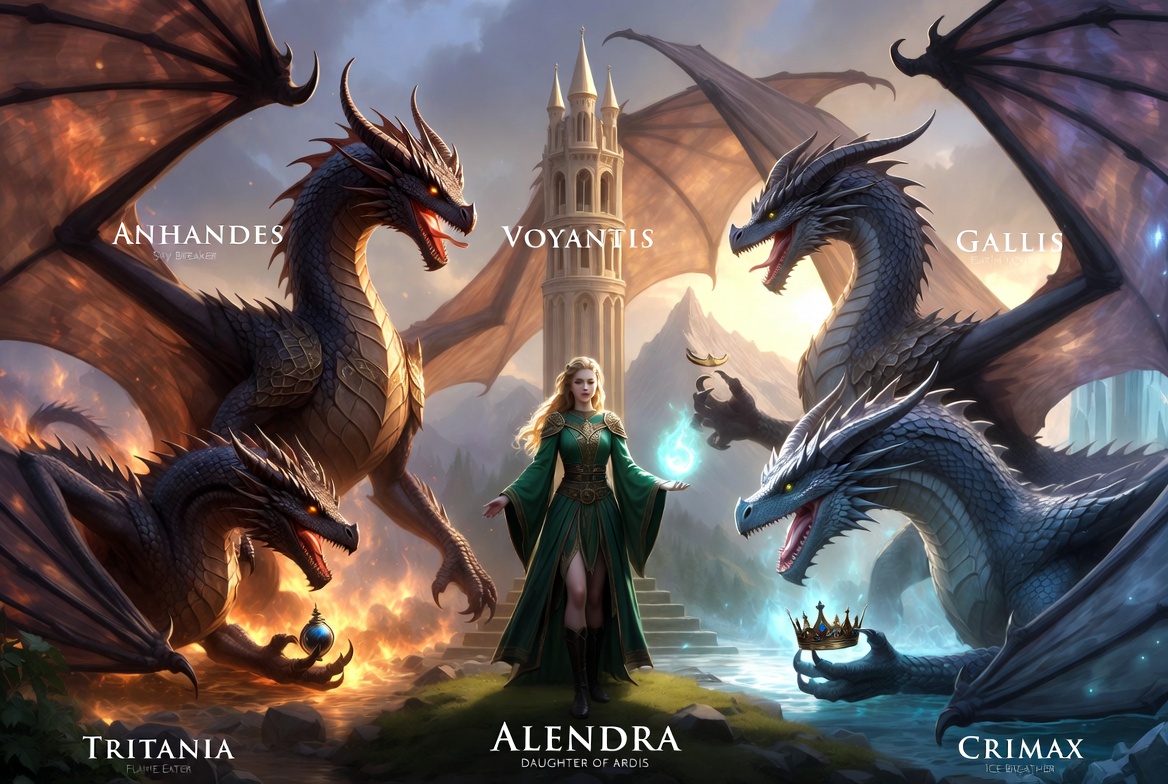
The magic known as the Inner Pillar owes its foundations to the people of Venefica, and the ancient order the Sisters of Voyantis. First of their order, Alendra, daughter of Ardis, awoke to her magical prowess when Vashandes the Sky Breaker, great wyrm of the north, laid waste to her home. Her mother, her father the chieftain, her sisters, and her brother, burned before her.

She sought out the goddess Ealyndryl to learn to master her art, who in turn evoked within the young witch the inspiration she needed to hone and perfect her craft. Alendra then taught this craft to other sorceresses in the tower of Voyantis, in the heart of Venefica.

In her hunt to free the realm from the terror of Vashandes, oldest of his kind, she first sought out the dragon Tritania the Flame Eater.

With her magic she brought Tritania to heel, and demanded three things in exchange for her life. She demanded the secrets of fire, a bauble for tribute, and the greatest fear of Vashandes. All of which Tritania delivered.

She then did this with Gallis the Earth Mover, and of him demanded the secrets of the mountains, a ring for tribute, and the greatest weakness of Vashandes. All of which Gallis delivered. And then on to Crimax the Ice Breather, of whom she demanded the secrets of water, a crown for tribute, and the knowledge of the greatest strength possessed by Vashandes. All of which Crimax delivered.

At last she, and her witches, came upon the ancient Vashandes. When Vashandes went to summon a storm of wrath, Alendra had banished the clouds, and rendered his greatest strength impotent. When he howled with rage and stomped and stretched his mighty wings, Alendra caused the earth to rise, and denied him the sky. Terrified, and without his greatest weapon, Vashandes parlayed for his life.

Alendra demanded the secret of air and sky, a throne for tribute, and his obedience for the rest of his days. All of which Vashandes the Sky Breaker supplied.

The Hounds of Cluth

Cluth, a chieftain in the lands of Loth and Myd, was a famed hunter. His armor was made from the skins of basilisks, his spear bore the talon of a drake, and his cloak was made of the fur of a sword-tooth lion.

While hunting in the old forests he came upon a massive tree, with each root as round as an old tree, its boughs scraping the clouds. There resided Fiondana, a Dryad, Lady of the Evergreen. So deep and fast was Cluth's love for Fiondana that he swore to serve her until his last day.

Stricken with the mortal, Fiondana issued him a challenge, and bade him return to her with three gifts: a silver apple from the Tree of Lament, an acorn from the Tree of the World's Birth, and a leaf from the Tree of Promise.

Cluth spent twenty years seeking these gifts, and his fame and name spread far and wide. He returned to the ancient forest, tribute in hand, enflamed with longing for his love. But the forest had been cut in his absence. Fiondana had died of despair, her treehome corrupted with rot, the streams that had fed her blackened with industry.

He begged Saedra, goddess of the Hunt, to grant him the strength to deliver vengeance. He offered in sacrifice the gifts he had gathered for his love to Saedra, who then became enraged. For Saedra had loved Cluth from afar, and when he offered her trinkets he procured for another, her rage became without equal.

She said unto Cluth: Mighty Hunter you are, but mightier still you shall be. I shall grant you eternal thirst for the blood of your enemies, but you shall stay at heel by my side, from now until the final setting of the sun. And so Cluth became a werewolf, dog unto Saedra, master of her pack.

Legends of Mercedor — Dirge of the White Wolf Clan

Mercedor, or "North of the Treasure" in Sargosian, straddles the north of Edor, and is the home of the Bearmen, and the Beastmen.

Thane Wulfric Dead-Eye had gained his fame and power by defeating the giant known as Grix, and felled him with a single blow from his axe. He returned home to find that his son, Ludmir, had been killed while wrestling with Alfrin the White Wolf.

Alfrin claimed the boy had fallen on to a stone, and that it was not by his hand that poor Ludmir met his end. He claimed his death to be the will of Mharaz. Thane Wulfric, consumed with rage, demanded he and Alfrin fight to determine the will of Mharaz. If Alfrin spoke true, then Mharaz would deal him the victory.

They dueled from the rising of the sun until its setting, and as the sun reached the horizon, Wulfric dealt the killing blow, striking deep into Alfrin's chest. As Alfrin was struck, the self same wound erupted on the chest of Alfrin's two elder sons, and on his seven young grand children. Alfrin's new, and young, wife is said to have howled in pain that same moment, as her unborn child emerged still born, with a deep gash upon his chest.

With one blow, Mharaz, god of Vengeance, had ended the White Wolf clan.

The Bravery of Gund

Viggur the giant visited upon the Haderon tribe of beastmen in the cold reaches of Borea. He felled their huts, devoured their goats, and had one by one eaten the beastmen. But in his rapacious hunger, the helm of a beastman had become lodged in his tooth. Viggur fumbled with his teeth, but his thick fingers could not grasp hold. He tried spears, and tree branches, but could not reach the helm.

His pain was great and he began to wail. Gund, a young beastman, emerged from hiding, and offered to help. Viggur, desperate for aid, carried Gund to his mouth. Gund grasped the helm, and pulled it free. Viggur shouted in joy, then swallowed Gund whole.

But Gund knew Viggur would do this. He carried in sacks at his waist the dung of cow, and bundles of neep. Viggur became sickened, and all at once vomited out all the villagers he had swallowed. They all gathered weapons, and slew the sickened giant.

To this day the beastman will say "Nonmemor Rudga," which means: "don't forget the turnips," when someone is rushing in to danger. Or the more popular axiom: "Viggur has had enough of bullshit."

Legends of Adoran — Vaga the Fate Spinner

Adoran, "Land of Mountains," east of the Huzor Sea, is dark, and mysterious. Although its main settlements pay homage to the Sargon, so much of the land is guarded by inhospitable terrain that whole peoples live in valleys and deep forests, that have yet to know the name of Sargos.

Ravik the Fair was king of Tarkanis, and all his glory was due to the blessing of the goddess Bendis, who loved him dearly. Bendis blessed Ravik with skill in spear, with keen eyes, and she guided his arrows in battle. Bendis promised Ravik he would never fall in battle in so long as he stayed true to her in his heart.

But Vaga too coveted Ravik, his great house, his strength, and his power. She was a sorceress who could pull the threads of fate. She seduced Ravik and swore to him that her magics were as powerful as the gods, and she would deliver him more glory than any god. Ravik wed Vaga, and Bendis wept.

Vaga, wife of Ravik, Maiden of the Veil, bore him many children, and her dark magics kept the goblins of the Uffern, and the Sidhe of Mystabor at bay. Together, she and Ravik united countless tribes, and the people that came from this union were grim, and resilient.

But while Ravik was loved, Vaga was feared. Her magic could change destiny, and while to those she favored their fortunes were great, to those who wronged her, there was no greater curse.

Ravik had left his great hall to hunt Zandalphon the Shadow Stalker, great dragon of the east. While he was away, an old crone came to visit, claiming kinship with Ravik, and asked for shelter from the cold. When Vaga beheld the ancient woman she recoiled in disgust. So revulsed was she at the woman's brazen requests that she began to spin her fate. But the magic failed, and the woman revealed herself to be Bendis, goddess of the moon.

For Vaga's weaving ways she was changed into a hideous spider with the torso and head of a woman. She was hunted by her own people, and driven from Ravik's kingdom. But Ravik's fate had long been girded by his sorceress wife. Without Vaga's magic to protect him, Ravik's arrows missed, his spear arm faltered, his eyes could not pierce the darkness, and he fell in battle.

The Armies of Bronze and Stone

The dwarves of the Smouldering Mountain lived in peace with the tribes of Avaria, Hyrhonn, and Molendi. The dwarves provided the men copper, tin, and silver, and the tribes would bring them wheat, fish, and things not found in the belly of the mountain.

King Hadrik of Avaria, King Gustaver of Molendi, and King Nithus of Hyrhonn, knew the dwarves held in their vaults glimmering gold, and fair gems. Hadrik and Gustaver felt such treasures should be theirs, for their numbers were great, and the dwarves did not march to war.

We keep these lands safe from the giants, they would cry. We protect their homes from the dragons, they would shout. What value are gold and gems to they but to sate their greed, they lamented. But Nithus rebuked their wails, shamed them for their covetous ways, and withdrew from their company.

And so Avaria and Molendi marched on the Smouldering Mountain and demanded the dwarves yield up their gold, their mountains of gems, and all they had stolen.

From the iron gates Kazan, home of the dwarves, emerged fifty men of stone, and twenty men of bronze. They wielded swords made of iron, sharp, and unbreaking. Five thousand men had gathered against Kazan, but were no match against the men of stone and bronze. The men of Avaria and Molendi were slain, every last one.

The men of stone and bronze then continued their march into the lands of Avaria and Molendi, but Nithus of the Hyrhonn pleaded with the dwarves for mercy. But the dwarves could not stop the men of stone and bronze. They knew to destroy Avaria and Molendi, and would not stop until the deed was done.

So the dwarves gave King Nithus seventy gems, and gave him the knowledge to stop the men of stone and bronze. So narrow was their goal that they could not defend themselves from Nithus and his men, for they were neither of Avaria nor Molendi. And the homes, children, and wives of Avarian, and Molendi people were saved.

Nithus and Hyrhonn were named brothers to the dwarves, and Kazan would share with them its gold, its gems, and its treasures uncounted.

Legends of Sargos — The Raven Queen

Before the founding of the Sargosian Empire, the peoples of the region were of Estix, Garion, Sindor, and Almatia.

The Almatian elves, or "the mound builders," owed their prosperity to the fertile valleys of Oslacus, and their protection to their queen, Madb Dunathine, priestess of the Raven Queen; Corvina. Legends are confused on this, as some hold that Madb and Corvina were one and the same, and that Madb was a goddess made flesh. One account attempts to tie the duality of Madb and Corvina to an apotheosis, not unlike the legends of Amon. Others still say they were sisters, and Madb was a goddess as well.

Regardless of these variations, what all of them share is the perspective that Madb was powerful, and capable of working miracles.

Madb desired to own access to the sea, and so she came to the Beul Namara, and with sorcery, elven craft, and the power of the gods, she crafted the high walls and sea gates of Aurumos. They stand today as a wonder of Almatian power.

Stories of Madb and her devotion of the Raven Queen are prolific in Almatia, and are shared with neighboring peoples. In Accipitera, Madb dueled Alendra in a contest of sorcery. In Almatian stories, Madb won. In Accipitera, Madb lost. Legends of Kilom say that Unarna, goddess of the sea, was enraged by the sea gates of Aurumos, and three times tried to fell them. But the Raven Queen proved too strong, and Unarna, and presumably the fleets of Kilom, failed in their conquest.

By the time Sargos came to conquer Aurumos, there was no Madb, nor Raven Queen, only disorganized elves that hid in their deep forests; Aurumos largely abandoned; though some say cursed.

Sargon

The tribes of Estix, Garion, and Sindor existed in varying stages of war, coexistence, and uneasy peace. Their proximity to each other, and rolling tensions; spurred competition, warfare, and progress.

But when foreign forces threatened their region, the three tribes found themselves uniting under a charismatic, and brilliant leader from Sindor: Sargon.

Sargon led the region to victory in every engagement against Adoran Raiders, slavers from Curva, and incursions from Tullisaba and Kilom. Most of the written knowledge of the "Age of Legends" comes from the detailed accounts of Sargon's military efforts.

Legends from the Far Reaches

The regions of Caltova, Thendare, Anthuwin, and the rest of the known world, are filled with stories and legends, many of which both intriguing and wondrous.

The Esurai — The Turris Argentis is the home of Malachi, a god of the Thendarens, and also worshipped in Rivas, as the twin brother to Mendacia. Malachi is the god of hidden truths, prophecy, and of vision. Each generation, Malachi whispers to the world, and a handful of Esurai are born. They have hair and eyes of silver, and they have the power to see a man's future. They are hunted and prized for their powers, and their blood is so strong in magic that powerful magi seek them out to enslave them. The Esurai are called to the Turris Argentis, to the throne of Malachi, and he dispatches his agents in the world to usher them home.

The Jade Queen — East of Nidurus, across the Straights of Izma, is the mist cloaked shores of Kalista, the hold of the Jade Queen. In some tales, she is a Fae, or a Jann. In some she is an ancient dragon. In others she is a powerful sorceress, and daughter unto a god. Some hold that all of these are true.

Adimar the Bold — Adimar, son of Rhaeus, King of Athicles, led his armies over sea to war against Rivas. Before the campaign, he traveled to the Turris Argentis to beseech wisdom and prophecy from the Esurai of Malachi. Adimar asked of the Esurai three questions: Will I die in battle? Will my men know victory? Will my name be remembered? The young prince was given three answers: No blade shall pierce your skin, nor arrow, nor spear. None of your soldiers will die by the hand of Rivan soldiers. You shall be covered in silver. Satisfied with his prophecies, Adimar embarked on his campaign. But enroute a storm struck them unprepared. All fifty ships were taken to the bottom of the sea. Rhaeus, King of Athicles, ever more called the narrow seas between the shores of Rivas and Athicles, the Adminar.

Amon — The legends that have come from Tullisaba are many, but each is consistent in their adoration of Amon. Amon, God of Unlife and Immortality, began as a mortal of Tullisaba, a mage without equal. He became a master of magic that controls the flow of life into the world, and learned to control the gates of death. He found the Sahari, the spirits that hold vigil over the three fold path; known as the Sarmundi. The Sarmundi of Birth, its herald is Nadya, the Sarmundi of Rebirth, its herald is Moti, and Amon ensconced himself on the Sarmundi of Death, and became its herald. He trained thirteen apprentices who became his Adonai and prophets, and spread his wisdom and vision across all of Tullisaba. Amon is the giver of eternal life. Those who serve him shall never know death.

Thus are the legends of Tullisaba, but it is well known in the lands of the Empire that Amon is nothing more than a corrupted mortal, possessed by foul demons, and a perverter of the natural order. His people stave off death by becoming undying shells, revenants, and ghouls enslaved by the Adonai Sorcerers who shroud all of Tullisaba in darkness and despair.

A curse upon Amon and all who serve him.

The Peoples of Omner

Species and Race

Eldan
Eldan
Elfling
Elfling
Human
Human
Nemedian
Nemedian
Shadai
Shadai
Sidhe
Sidhe
Sith-Anor
Sith-Anor
Thorfor
Thorfor
Urchin
Urchin

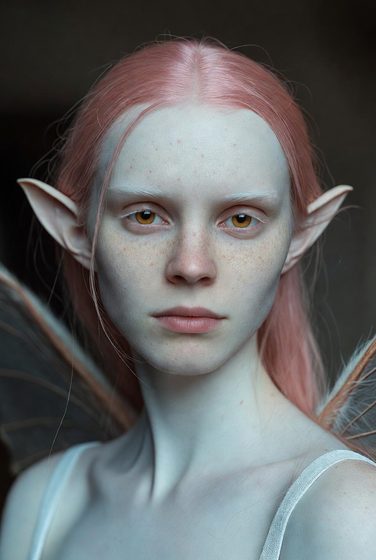
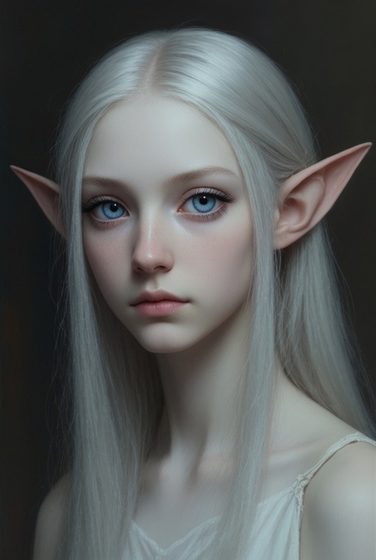
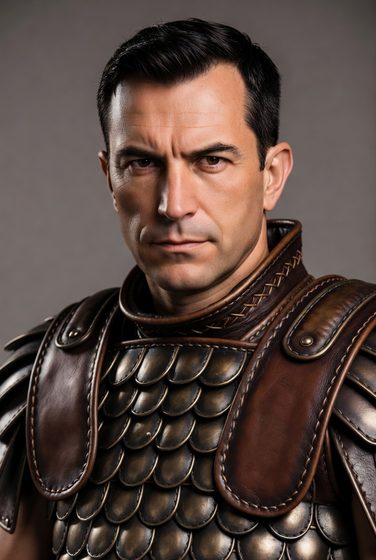
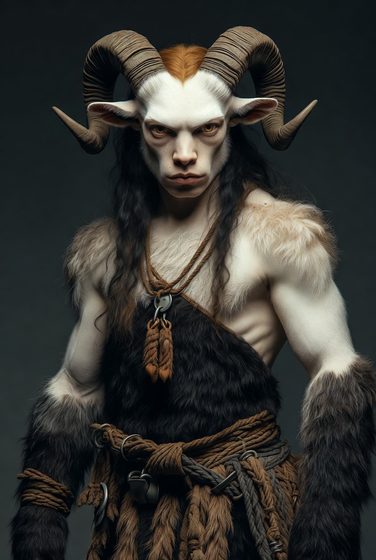
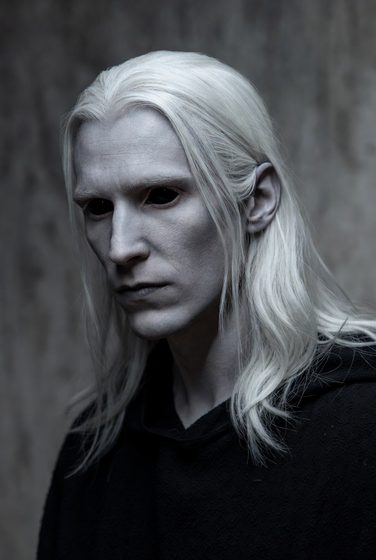
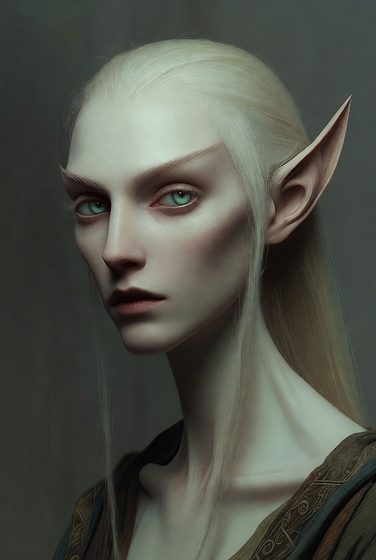
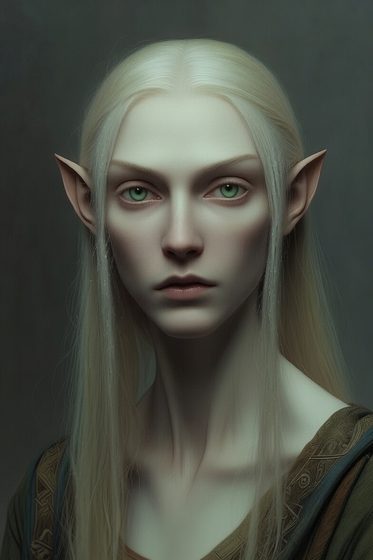
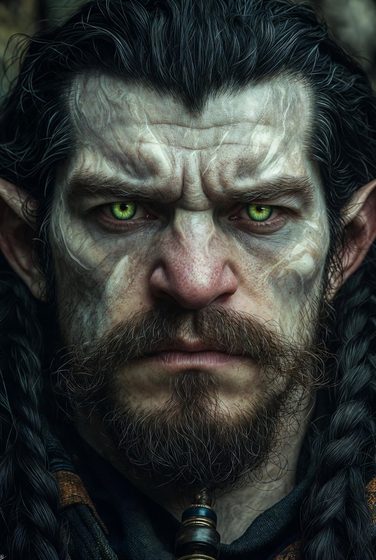
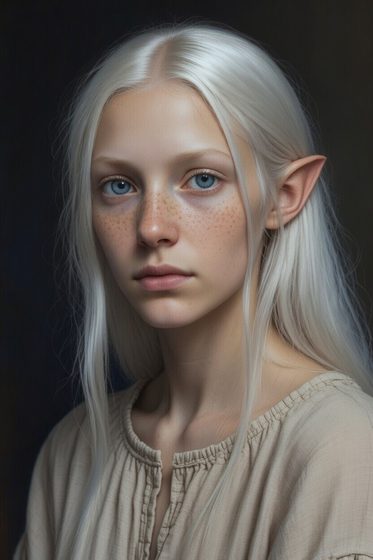
Species is a technical assignment, while Race is subjective. For the purposes of game mechanics a species denotes a broad category that accounts for mechanical elements such as propensity for strength, intelligence, how naturally predisposed they are to magic, size elements, as well as basic physical components. Race, in a physical sense, is a descriptor for how denizens of that species may diversely be described. It will denote things like variations in skin, eye, hair color, or for some species, more dramatic components like the shape of their horns. Selection of a race will inform non-mechanical aesthetics about the character and are purely for roleplaying purposes. There are six main species and three options for half-breeds that players can choose from when making a character:

Inter-Breeding

Humans, Sidhe, and Eldan all descend from a common ancient ancestor, and while distinctly separate species, are capable of interbreeding with each other. The males of these efforts, however, are born infertile, and the females only produce children of the same species as the father. Physically, they carry a blend of their paternal and maternal parentage races.

Nemedians, as a type of Beastman, are more alike to Centaurs, and Satyrs, than they are to the other species. This makes them incapable of interbreeding with the other player character species. Thorfor are a unique species with no other genus of their type in the world, and do not reproduce as other species do. Shadai are anomalies born only to two human parents and are all infertile.

Prejudice

The Blood Vale is a hotspot for the whole of the known world, and it has a diverse racial and cultural representation. By old world standards, it is remarkably tolerant of this diversity, at least by comparison to the rest of the world. Despite this, Humans are by far the most dominant species, but even within humans, variations in skin tone, ethnicity, and cultures, create dividing lines.

Eldan

The Eldan are a reclusive people by nature, the vast majority of them nestled in the land of Vistelvin, in the heart of Anthuwin, where the mournful song of Dulemar, the Whispering Spire, can be heard for miles. Eldan can be found all across the world, for despite their love of solitude, their love of exploration is a greater calling.

Compared to humans, Eldan are spry and lithe, with an almost childlike frame. Their pale skin and uncanny hair and eyes give them an elf-like quality, mistaking them for Fae by those unaccustomed to their presence. Eldan also have slightly sharpened ears, less pronounced than a Sidhe. Eldan hair does not gray with age, nor do their features prune nor wrinkle. As they tan, their skin gets a darker shade of blue. Rumors speak of Eldan from deep within Tullisaba with indigo skin and ornate wings not unlike a butterfly. While they are abundant in Anthuwin, and in their homelands in Vistelvin, the Eldan can be found in high densities in the Blood Vale, Alendor, and Mydlothnyr. Other people casually refer to an Eldan as "Moth" or "Flutters," but the word "Eldan" comes from Sithi language roots, and means "Child."

Humans, out of their own lust and nature, consider Eldan women to be harlots and lustful, which could not be further from the truth. They are also considered to be thieves, liars, and swindlers. Eldan are more likely to be sold into slavery, and are often employed as servant staff to lords, and wealthy merchants.

Azrehan — Regions: Southern Edor and Adoran. Bright yellow or flaxen hair, sometimes pale red or pink, with eyes of amber or gold, and pale white skin that can become light blue if sun weathered. Their wings here are furry, and dusty, like a moth.

Ilroth — Regions: Aeberius and Nidurus. Dusty gray or black hair, pale powder blue tinted skin, with eyes of purple, or even red, and translucent wings like a dragonfly.

Elfling

Elflings are born from the rare and tenuous union between the Sidhe and the Eldan. Possessing traits of both races, they are a bridge between two worlds—yet often belong fully to neither. Where the Sidhe carry ancient majesty and aloofness, and the Eldan embody whimsical exploration, the Elflings inherit a curious blend of pragmatism, wonder, and mysticism.

Elflings combine the lithe, sharp features of their Sidhe ancestors with the delicate and ethereal appearance of the Eldan. They are smaller and less imposing than the Sidhe but taller and more solidly built than the Eldan. Their ears are slender and pointed but lack the extreme elongation of a Sidhe's.

Elflings are rare and exist primarily in human lands where Sidhe and Eldan influences overlap. This tends to make them the product of very large trade cities, and makes them less of an oddity in Portasang. Outside these areas, an Elfling is considered an exotic and curious presence.

Called "Halflings" by humans or "Ainsith" by Sidhe, Elflings carry a reputation as tricksters, misfits, and outcasts. Eldan view them as "waning lights," while the Sidhe often dismiss them as "fading echoes." These terms reflect their mixed heritage, seen as a dilution of greatness by either parent race.

In reality, Elflings are fiercely adaptable, creative, and resistant to despair. They often embrace their dual nature, using it as a source of strength rather than shame.

Human

Industrious and populous, Humans have made most all corners of the world their home. They are ever present, and are by far the dominant peoples of the world. Humans are known for their predisposition for establishing nations, cities, trade, and commerce. They are at the core explorers, seeking to take all things to their limits.

Humans are the baseline species, with wildly ranging heights, skin color, hair, build, etc. Humans can be found most anywhere. Their penchant for discovery and exploration in search of commerce and land has seen them make a home in most any environment, adapting quickly. In the Doshik tongue, humans are called "Prava", which is a slur meaning "Weak." In Lewrian and other Sithi languages, humans are called "Kaijik," which means "plague" or "disease." Humans are mistrusted by the other races as much as they mistrust the denizens of the world. They are seen as hungry and exploitative, and are considered the root of all the ills that befall the world. While this is true, it is also a broad brush stroke. Humans are simply better at it than most.

Humans are the most profoundly shaped by their regions and climate, and their "race" derives from the large subcontinents they hail from: Edor, Adoran, Tullisaba, Nidurus, Aeberius, and Mercedor. Those of far northern climes, such as Mercedor, are fair haired (light browns, blonde, orange and red) with light complexion of skin, and a predisposition to blue and green eyes. In more temperate climates such as Edor and parts of Adoran, their hair darkens to browns and blacks, with the occasional blonde. Humans of Aeberian or Sargosian heritage are more swarthy, with olive skin, thick and curly hair, normally black, or dark brown, with the rare occurrence of blonde. Eyes are of all the human range in these regions: brown, blue, green, hazel, gray. Niduran humans are uniformly dark of hair, thick follicles, with a light to rich brown skin, although humans from the Kalistan isles tend to be lighter of skin, with dark hair that is more thin. Tullisabans have even darker skin than the Nidurans, uniformly dark eyes, and coarse black hair.

Nemedian

Warriors, huntsmen, and feared by all for their battle-rage and their size, the Nemedians are only a minor people in the world for their lack of desire to congregate or settle in one place. They are clan organized, but in times of conflict, are known to form into massive warbands, united under a single warlord; one strong and charismatic enough to hold the warband together. Large and imposing, Nemedians are humanoids with deeply animal-like features. They have thick hair, fur lined limbs and torso, with ram-like horns, and thick jaws. Their arms are long and shoulders broad for their frame.

Nemedians, while largely nomadic hunters, have carved out an empire in the lands known as Bodas, but maintain a large presence in other corners of the world. Nemedian clans typically stay together, creating communities in lands where hunting is plentiful. While this brings them into conflict with up and coming lords who are trying to lay claim to swaths of hinterlands, smart lords appeal to the warlike nature of the Nemedians, hiring them as irregular soldiers in exchange for hunting rights.

Called Beastmen by most humans, varied only by the languages, Nemedians have a variety of names. The Amonian word for Beastmen, for example, is Bastrom, literally joining the word for Beast (Bas) and Man (Trom) together. Nemedians have a terrible rage, and are known to get angry quickly. This is a stereotype because it is true. They are seen as dull, and dimwitted, but this is actually not the case.

Boreans — Mercedor and Edor. Skin the color of ivory with curved ram horns, hair that is dark brown to light red, fur that is dark brown to black, and eyes of light amber to dark brown.

Akaven — Aeberius. Horns that are long and twisted, like an antelope, deeply brown tanned skin, eyes of hazel or blue, and hair and fur of black or dark brown.

Raman — Nidurus, Tullisaba. Horns that are wide and pointed, like a bull, and dark brown skin with coal black eyes, fur and hair that is deep brown or black.

Shadai

Born to human parents, the Shadai are an anomaly. While rare, from time to time, a human child is born a Shadai. They are roundly considered ill-omens, and many are abandoned, killed at birth, or hidden from the world, only adding to their poor reputation. While none know how a Shadai is born, everyone is certain they do, and this has given birth to all manner of odd custom: abstaining from procreation under a new moon, eating eggs after sundown, etc. The first recorded birth of Shadai happened just after the Rending.

Shadai are gray and pallid, with coal black eyes, and platinum white hair. This is all that distinguishes them from other humans, but is stark and noticeable, especially up close. Shadai are found anywhere a human can be found, though at 1/200th their numbers. In the Dominion, Shadai are considered blessed by Aurisus, and are elevated to the highest segments of society. In almost all other places they are feared, shunned, and mistrusted. They are called "Stillborn", or "Coalmen." People are creative with their aspersions. In all regards, a Shadai is a human that looks different, but is otherwise a human. But the mystery of their origin and their alien appearance has caused others to consider them evil, cursed, and consider keeping their company a courting of dark fates.

Shadai resemble any human relative to their ethnicity by way of features and facial composition, but hold some noted exceptions. These exceptions are immutable and do not vary by ethnicity. All Shadai have skin that is light gray, and like the Sidhe, does not darken or burn in the sun, but becomes paler over time. Their hair is a shock white, and their eyes are coal black, with no visible whites, nor iris.

Sidhe

The Sidhe are an ancient race in the lineage of the Fey themselves. They dwell solely in the physical world, severed from the Fae Realm, trapped in mortal form. They have carved great kingdoms on the world, and for the most part, stand apart from human kind. Tall and thin with elfen features, the Sidhe have a haunting beauty. Their features are gaunt and sharp, with large slender ears that rise to a point. Sidhe, while not prone to exploration as humans are, can still be found in the more human population centers, though this is the exception. Two great lands are the home of Sidhe sovereignty, the lands of Lewria, and Mystabor. The Sidhe are also prevalent in the far east.

They do not grow facial hair, nor does their hair or skin show meaningful signs of age, save a frown line, or furrowed forehead. Sidhe skin does not burn or darken in prolonged sunlight. The common epithet for Sidhe is "Elf," and many humans default to this name when referring to them, although the Sidhe do not care what humans call them. They are seen as cold, detached, and by many accounts, cruel. These are not too far from the truth. Their mystic heritage and long life make them see the other people of the world as children, and reckless. While they suffer prejudices in human lands, they are no more fair to non-Sidhe in the lands they hold dominance.

Valnoth — Edor. Fair skin, almost alabaster white, with hair of platinum blonde, or ivory, and eyes of brilliant clear blue or green.

Melendil — Adoran and Aeberius. Skin is more human and flushed although still light, hair of auburn, light brown, and eyes of red, purple, or turquoise. The ears of the Melendil are noticeably shorter, though still pointed at the tip.

Yosei — Nidurus. Pale white skin and hair that is either a fair blonde, white, or pitch black. Their eyes are clear blue, green, or ruby red.

Sith-Anor

The Sith-Anor are a unique and enigmatic half-breed race, born of a union between Humans and the Sidhe. Trapped between the industrious nature of their Human ancestry and the ethereal heritage of the Sidhe, the Sith-Anor embody traits of both worlds. They are marked by their ability to adapt to mortal struggles while maintaining a faint tether to the Fae Realm, existing as wanderers of twilight.

Sith-Anor appear as light and wiry humans, with ears slightly pointed at the tip. The Sidhe are far travelled and have homes in a variety of regions, making their contact with humans fairly common. They can be found anywhere humans and Sidhe are found in proximity. The Sith-Anor are fairly well accepted as a mixed-race, and they are easy to identify. Their name is of Sithi origin, meaning "Descended of the Fae," but humans also frequently call them "halflings" as a mild aspersion. It is common for human nobles to marry a Sith-Anor bride, but as the males cannot provide any progeny, they are often treated as less "valuable" than their female kin.

Sith-Anor favor their human heritage and ethnicity, but inherit a slender frame, and ears that are slightly pointed at the tip. They are otherwise human in their skin, hair, and eye color.

Thorfor

The dwellers of mountains and steep hill country, the Thorfor are the most reclusive of all the races. While they do engage in trade and commerce with other peoples, it is rare for a Thorfor to travel lands outside of their home without others of their kind with them. They are born in the heart of their mountain home, Hersteller, and Thorfor are unable to mate and reproduce when they are away from their secluded sanctuary.

Stout and short, with broad features, and a dense build. Thorfors are unnaturally strong and durable. Their eyes are small in their face, and give off a flickering light, appearing like small twinkling gems. They have large noses and jaws, with coarse gray skin. Thorfor call the lands of Hyrhonn their primary home. While they can be found in other lands, it is usually as part of some purposed group or trade effort. It is rarer still to find Thorfor women away from Hersteller, so much so that no one can say with any certainty that they know of a single person who has ever seen one.

Called "Dwarves" by many, or the more insulting "Stuntys", Thorfor suffer a significant slew of aspersions, mostly referring to their height. By many accounts they are larger than Eldan, but their short arms and legs are the source of comedy to outsiders. Thorfor are known to be loud, stubborn, irritable, and are fond of drink, and feasting. That is, of course, when they are around others. Among their own company they are gracious, and temperate.

Thorfor hair is black, stone-gray, or dark brown, and does not gray as they age. Thorfor men have thick beards which they rarely shave, but do decorate. Thorfor hair is notoriously thick and strong, easily three times thicker than a human's. Their eyes appear as gemstones, twinkling and small, and bright in color (normally red, green, or blue), with no whites. Their skin is uniformly light gray, not unlike a Shadai in coloring, but it is striated with ivory and white, appearing as marble. Thorfor are all born in one place, Hersteller in Hyrhonn (Adoran), and have no racial diversity to speak of.

Urchin

The offspring of a Human and an Eldan, these poor souls are rarely the product of a happy home. Most are orphaned, and their population is significant in large cities. Their prevalence on the streets gives rise to their name. Most can be found working as stable hands, or doing animal husbandry work on farms, due to their preternatural ability to work with animals.

Urchins look like small framed humans, light on their feet, but alien enough to be spotted on casual inspection. Their ability to glow when they are upset is a striking feature, and gives away their nature quickly. Urchins are the most populous of half-breeds, and they can be found anywhere Humans and Eldan congregate in large numbers. They are found in most any large city.

Urchin is the common name given to their kind, though terms such as "hoodlum" or "street rat" are interchangeable with "Urchin" in large cities. They have a reputation for criminality and theft and are generally mistrusted by most. While most of them have grown up on the streets, their association with crime is not without merit, even if it is tragically unfair. Urchins favor their human lineage and ethnicity over their Eldan heritage, with a few exceptions. First, their hair tends to be a lighter shade than others in the same ethnicity. Their skin coloration, and eye color, are otherwise uniform with their human heritage.